Louise and Rob: Day One

We wake up after barely sleeping at all, Rob is anxious and excited as this is his first flight, and Louise is really nervous and excited because, well just because we’re finally going to Japan!

Bento

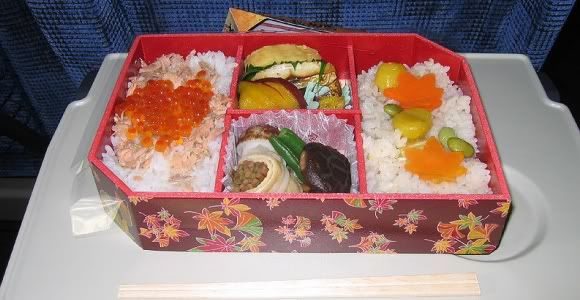
Bento is a single-portion meal that can be either homemade or takeout. Basically it's a pack-up, but Japanese style.

Louise and Rob: Day Two

We wake up jetlagged, but pleased we didn’t draw the blinds, the view is still amazing, and we can watch ant-sized Japanese people rushing to work while we feast on Milk Pocky, Koala’s March biscuits and odd textured buns masquerading as donuts, all washed down with cold coffee and grape Fanta.

Train Stations

No doubt you've heard all about Tokyo train stations. The horror stories of how busy they are, how confusing the maps are, how people get pushed onto rush hour trains. Forget all of your preconceptions - Tokyo has possibly the most efficient train station in the world

Louise and Rob: Day Three

We wake up super early again – a combination of jet lag and excitement, we’re going to Ueno Zoo today! This is one of the things we planned immediately when we decided to go to Tokyo, so we’re really looking forward to it, particularly because this will be the first time either of us have ever seen a panda.

Asakusa

Asakusa (浅草) is a district in Taitō, most famous for the Sensō-ji, a Buddhist temple. Asakusa is Tokyo's oldest geisha district and a former entertainment district. Asakusa's main attractions are a number of shrines and temples, including the Sensō-ji, a small carnival complex called Hanayashiki and traditional activities such as river cruises and rickshaw rides.

Showing posts with label shrines. Show all posts

Monday, 28 May 2012

Louise and Rob: Day Ten

Today is our final day in Tokyo, so Louise begs Rob to add the Moomin Cafe into our itinerary once again, to which he agrees upon remembering how nice (and huge) the cakes are there. We also decide to head to Meiji Jingu in Harajuku.The day is boiling hot, so it seems like a good idea to wander around the leafy shrine gardens.

We sadly take the Yamanote line for what we know will be one of our last ever train rides in Tokyo and jump off a Harajuku. As soon as we begin to approach the park we notice buskers, cosplayers and people hawking art and music. We stop and buy a pair of paintings for about £7, before heading to the cool, shaded cafe standing to the entrance of the shrine. We refuel with chilled oolong tea and icecream and enjoy some people-watching before beginning the lovely shady walk to the shrine.


A lot of the wooded areas in Japan are so reminiscent of the scenery in Studio Ghibli's Princess Mononoke we half expect to see a kodama sitting amongst the bushes. We snap the obligatory pictures of sake bottles and the gigantic torii, and carry in tripping happily down the sun-dappled path to the shrine.

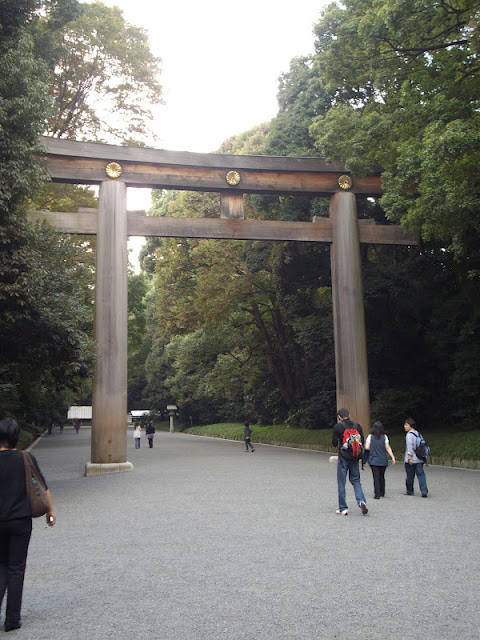

The shrine itself is beautiful, with lots of dark wood, gold and white - but it's baking hot in the courtyard, and the sun bleaches out most of the pictures - so we have a quick wander around before retreating to the cooler and less crowded gardens.


We pay around £6 to enter the shrine gardens, but are sadly told that we cannot visit Kiyomasa's Well, a powerful healing spot, as there is a problem with it that the ticket sellers limited English, and our even more limited Japanese can't quite translate. But the entry fee is still great value as the gardens are stunning.

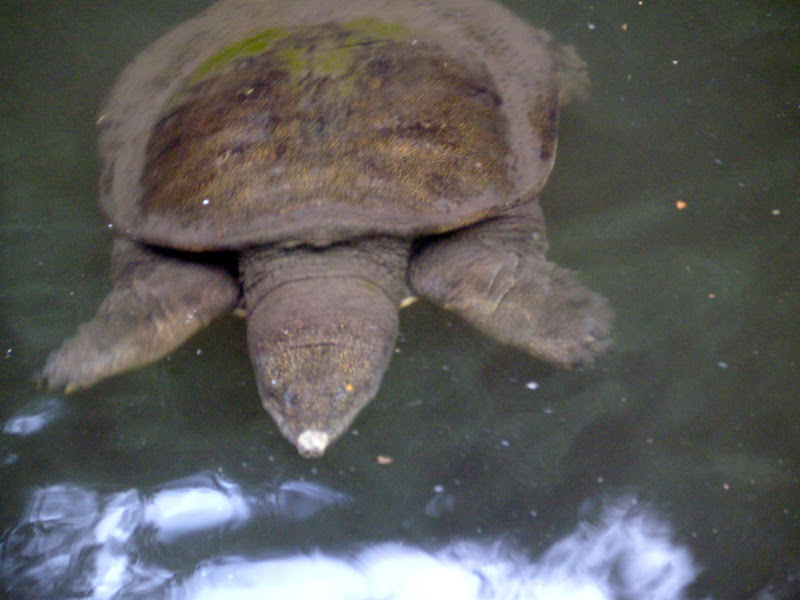
We spend a long time sitting on a wooden platform over a greeny-brown pond full of golden, red, white and black koi swimming lazily around, and great big, blocky turtles gently drifting. We spot a kingfisher in the distance and bask in the sun while enjoying the peacefulness of nature. We both feel an overwhelming sadness about leaving Tokyo, but it's hard to feel sad in such beautiful surroundings.


We wander through beautiful sun-streaked paths of broad-leafed trees, stout bushes and the gentle sounds of a stream trickling. The irises aren't flowering, but there are signs of life in them, and big, black crows hop along the floor, crackling in the twigs. We spend hours in the gardens, before emerging to a sunny, and busy gift shop, where we pick up some incense and some ice cream from a vending machine. Our adventure is almost over.

We end our day in Korakuen's  Moomin Cafe with sweet non-alcoholic cocktails, before picking up a few Moomin souvenirs and some pumpkin-filled bread from the adjoining bakery to serve as breakfast the following day.


And then we say our goodbyes as we prepare for the long flight home.

Friday, 12 August 2011

Louise & Rob: Day Five

We wake early to a fresh fruit breakfast while watching Sunday morning anime, which appears to be about football-playing robots...’cept it’s all in Japanese – obviously. How we love Japanese TV. We make our way to the train station – excited about leaving Tokyo for the first time. We catch the train and end up nose to armpit with what seems like the entire population of Tokyo, including a group of anime-styled teenagers who spend the journey on their mobile phones and pulling faces at each other. Kamakura seems an awful long way away when you’re stuffed into a train car on a hot day.

When we arrive we decide to head downhill which Rob thinks will lead us to the beach, on our way we pass a tiny sushi shop, and after deliberating what’s in the interesting looking fishy ones pick cucumber maki rolls. Food in hand we pass by roadside shrines – filled with fresh flowers, incense, books and food offerings.


We’re also really amused by the sight of a KFC complete with full-size Colonel Sanders statue. Awesome.

The beach is a huge sandy stretch, surrounded by grassy hills and mountains – and the occasional mysterious sign, which seems to feature a huge black bird with some sort of warning...great. We debate whether this means we’re going to be eaten, or taken on a jolly flight. But by this time we’re starving so sit down to eat our sushi on the beach, watching local families paddle in the surf and poke sticks at crabs.


As we’re eating we become aware we’re being scouted out by giant black birds – which Rob suggests could be kites. However for now they seem to not be killing us – which is good. We do finish our meal more hastily than before though while keeping an eye on the birds.

After checking our guidebook we decide to head towards the giant bronze Buddha. We get distracted by a vending machine – Louise gets a peach drink, which tastes just like eating a peach. Japan feels a little bit like Willy Wonka’s Chocolate Factory sometimes. We get completely lost and end up in a suburb-style area with some seriously big houses. We finally give in and decide to ask for directions and after being set on the right track we shelter from the blazing sun in a German-style cafe tucked off the main street.


Louise orders a mouse-shaped bun and is enthralled by the weird spiky flower on the table. After a cooling drink and sweet treat we head back onto the Buddha trail. We dip in and out of shops and realise how big an influence Hawaii has here. All of the shops are tuned into Hawaiian radios, and all seem to sell surfing gear, alongside wooden novelties and string dolls.

The day is so hot we grab a triangular icecream as we make our final ascent towards the Buddha. We pay a tiny amount to get in and are handed a wad of leaflets. And then we see the Buddha – it’s huge. There are huge pots of incense burning and plates piled high with oranges, and fresh flowers, and people. The whole area is vibrant and busy.


We both light a tightly packed bundle of incense, and decide not to go inside the Buddha’s claustrophobia-inducing belly despite the fact it’s ridiculously cheap. We look around the surrounding gardens and sit down in a shady secluded spot – it’s such a hot day.


After a quick recharge Louise is eager to be up and off again, but Rob has other plans...

Unbeknownst to Louise, Rob has been planning to propose this holiday, and this seems like the perfect time and place. By and large it goes well – especially when she says ‘yes’! The ring is only a makeshift one, purchased on the sly from a gift shop earlier in the day, and costing the princely sum of Y380. It’s a pink heart set in silver metal and Louise had wanted it when she saw it in the shop, but it didn’t fit the finger she was thinking of. Fortunately it fits her ring finger just fine!

We spend the rest of the day in a happy glow, ecstatically hopping from shop to shop, looking at gifts and planning our future. We’re so overjoyed we don’t even mind being crammed in the train on the way back.

On arriving in Shinjuku we return to the hotel for a bit of a rest before heading into Kabukicho for our evening meal and another night in the amusements. We find a tonkatsu restaurant which boasts sublime complimentary green tea, as well as delicious tonkatsu which we eat surrounded by businessmen and enjoy the boisterous, but smoky, atmosphere.

In the arcades we win Spirited Away playing cards and a Catbus flannel on the UFO catchers – thanks to Louise’s sheer skill. We also have a good go on the Taiko drumming game – a fantastic way of expending calories and by the time we’re done our arms are ready to drop off. Rob scores high while Louise bops along to the cheerful J-Pop beats.


We head back tired but happy, and so ends the best day of the best holiday of our lives so far.

Friday, 5 August 2011

Louise & Rob: Day Four

We have a late start for the first time since arriving, eating chocolate chip bread while watching Japanese TV. We see the Mameshiba advert for the first time and quickly become bored of the irritating Curry Marche advert.


 We plan to see the temple at Asakusa today. We pour over the train and underground maps in our guide books, and decide the quickest way to get there is via Ueno. (Plus we went there yesterday – so it’ll be easy to find – right?)

We buy our tickets and walk through the gates like seasoned pros at the train station, but then become disorientated in the vastness of Shinjuku station. We eventually find our platform and we’re on our way.

Almost as soon as we arrive we’re thrown into the bustle of the shopping streets, we buy blackened roasted chestnuts from a street vendor, hot to the touch and wrapped in a small paper bag.

We become very excited about the market atmosphere of the shops, with baskets and tables piled high with goodies, and decide to buy some souvenirs for our friends and family. Louise is thrilled to find some very cheap vintage haori (small lightweight jackets – made from old kimono.) and buys a dusky pink one for herself and a pale pink one for her mum. We also browse inside and look at the exquisitely embroidered obi (kimono belt) and tiny tabi (cotton socks made to be worn with kimono). Along the way we buy colourful handkerchiefs, lacquered chopsticks, and various other trinkets and gifts.


We soon arrive at the Nakamise shopping street, and find shops peddling wooden kitchenware, garish kimono, wind-up toys, and geisha paraphernalia – such as wigs, fans and eye-wateringly expensive hair combs. There are also numerous food stalls selling sushi, udon and other snacks.


We buy sparkling water in an unusual bottle, which the vendor bangs on the table to release the marble stopper, which we later discover is a Japanese seasonal drink called ramune. We sit on the edge of a fountain and enjoy the chestnuts and water – licking the soot off our fingers.


We’re then tempted by a delicious potatoey smell, and discover a stall selling deep-fried potatoes, cut in a spiral and then rolled in seasoning. After indulging in a potato each, we move onto an archery side stall, where Rob does terribly and Louise does well – winning some theme park tickets (which we never actually get around to using). We approach Senso-Ji, walking through the various gates.

We come across a huge structure and discover that it’s a fortune-telling stand. We shake the tin and retrieve our sticks, this time getting our own fortune, by matching the stick’s symbol with ones on drawers. Louise’s is a very good one, and once again Rob’s is bad – warning him not to make any major decisions, such as moving house or getting married.


Before approaching the temple we cleanse our hands and mouths, as is the custom, and rub the healing smoke from the giant incense pot, Louise focusing on her sore feet. When we reach the temple we dodge flying yen and make wishes, before lighting remembrance candles.


On our way out and back to the station Rob buys a bracelet for Louise, it resembles the karma bead bracelets that were all the rage a few years ago, but has a tiny icon of the goddess Kannon inside one of the beads. Louise is also thrilled to spot a giant tanuki statue outside of a traditional-style restaurant.

We catch the train to Harajuku and meet a friendly business man who practices his English on us and shows us pictures of his pet dog. Harajuku is absolutely packed, but full of interesting looking shops and stalls, Louise finds a stall selling silk scarves and picks a vintage purple one with a hummingbird on, we browse the shops for awhile, and Louise falls in love with some giant plush cat paws, but upon deciding they wouldn’t fit in the suitcase purchases a Rilakuma t-shirt instead.


In the same shop we find a Chupa Chups lolly machine, where you pay 200 yen and get a ‘surprise’ amount of lollies. We discover vanilla ice-cream flavour, and know that we’ll never taste anything as good again.

We decide to search for Condomania – a shop that we have read about in our guidebook, and find it quite easily by the neon pink giant condom in the window. We browse the giant condoms, tiny condoms, glowing condoms, animal shaped condoms, you get the picture. We leave without making a purchase.

We decide to return to Harajuku a little earlier as dusk is falling and we’re getting hungry, so we head back to the hotel and drink cold Asahi beer from the vending machine, before heading to the hotel restaurant for food. Feeling refuelled we head out to play in the arcades in Kabukicho.


We have our first taste of Tekken 6, playing each other before two locals wipe the floor with us. We then find a generous grab machine that dispenses Disney lanterns, sweets, colourful soot sprites and string dolls. We win so much that the machine needs to be refilled, and we are given bags to carry out our goodies. We then head to a pachinko hall and try and master the upright pinball, and fail miserably – but have fun doing it. We play in various arcades, and find one that has a ufo catcher that’s full of curled up plush cats, we try and win one for a while, and a kind business man must have spotted us struggling as he alerted an arcade worker who came up and asked “Which one would you like? Shall I make it easier?” before moving the cat of our choice closer to the winning hatch. The business man watched us for a while, laughing at our efforts before handing over a cat he had won earlier. So eventually we emerge victorious with 3 curled cats.


We make our way back to the hotel, before snacking on sakura buns, bought in Shinjuku train station, and fall asleep looking forward to some actual fruit and vitamins tomorrow.

Wednesday, 3 August 2011

Meiji Jingu


View Larger Map

Meiji Jingu (明治神宮) is a Shinto Shrine in Harajuku dedicated to the deified spirits of Emperor Meiji and his wife, Empress Shōken. The shrine is set within a forest and includes a beautiful, traditional Japanese garden as well as the shrine itself.


The gardens of the shrine are very tranquil, and are a haven away from the bustle of Harajuku, it's a wonderful place for quiet reflection, and sun-dappled walks.

Information
  • The shrine has variable opening times throughout the year, but is generally open between the hours of 7am-4pm, it's best to check the official website for more thorough information. The garden is open 9am-4.30pm Mar-Oct, and 9am-4pm Nov-Feb.
  • Entry to the shrine is free, while a garden ticket costs 500JPY (around £4)
  • Official website:  http://www.meijijingu.or.jp/english/
How To Get There

The shrine is about a 1 minute walk from Harajuku station, which is on the main Yamanote loop


Monday, 1 August 2011

Kamakura Daibutsu & Kotoku-in Complex


View Larger Map


Daibutsu / 大仏 is the Japanese term for a large statue of Buddha - it quite literally means 'giant' (dai) 'Buddha' (butsu). There are many examples throughout Japan, ranging from the old (Asuka-dera in 609 AD) to the new (Ushiku Daibutsu was created in 1993).


All are large, imposing, beautiful and magnificent. One of the more famous examples is the Kamakura Daibutsu in Kamakura, Kanagawa Prefecture, which was created in around 1250 AD. It was made more famous in a Rudyard Kipling poem, and is a destination for countless visitors annually.


We were lucky enough to visit this particular spectacle ourselves, and in fact it was under Kamakura Daibutsu's watchful gaze that we got engaged, back in 2008. We can attest to its impressive, imposing presence, even if it didn't happen to be the most memorable part of the excursion for us that day...

The Buddha is situated in Kotoku-in complex with a few of the usual findings in a Japanese shrine, such as incense and trinket sellers, and fortunes. 

The walk up is also rather nice, with a number of stalls and shops selling traditional Japanese food, souvenirs and other bits and pieces.

Information
How To Get There
The Kotoku-in complex is within walking distance of Kamakura station, which can be accessed via the JR Shonan-Shinjuku Line from Shinjuku, or the JR Yokosuka Line from Tokyo Station.

Monday, 10 January 2011

Louise & Rob: Day Two

We wake up jetlagged, but pleased we didn’t draw the blinds, the view is still amazing, and we can watch ant-sized Japanese people rushing to work while we feast on Milk Pocky, Koala’s March biscuits and odd textured buns masquerading as donuts, all washed down with cold coffee and grape Fanta. Lament the fact that the only fanta we get in the UK is crap and tastes of mouldy oranges,

We decide to stick around Shinjuku for the day, as we’re really tired and not feeling hugely adventurous yet. I wear my owl top, and later notice lots of Japanese girls eyeing it up enviously. Good old Topshop. We take the terribly polite lift down to reception and prepare to get lost. We spend quite a while wandering around Shinjuku aimlessly, just enjoying the sights, sounds and general atmosphere, before too long we find ourselves at a large red Torii gate guarded by a pair of stone lions, sandwiched between offices, shops and restaurants – such is the nature of Tokyo.


Without even realising it, we’ve found Hanazono Shrine. The first thing we do is find a tree surrounded by paper fortunes. We go to a nearby kiosk and hand over 200 yen. We then shake a tin full of long sticks, each with a symbol on. When we each have a stick, we hand these over to woman behind the counter, who finds the corresponding fortune for us. Mine is good, however Rob is not so lucky. We then tie our fortunes to the fences surrounding the trees, as the Japanese believe the winds blow away bad luck and seal good luck.


We have a wander around and admire the shide (paper zig zags) that adorn the shrine. We throw lucky 5 yen coins into the collection tray, clap our hands and rings the bells, as custom dictates. We find it very hard to believe that somewhere so tranquil is in the centre of bustling Shinjuku.

 We leave the shrine behind and decide to head to Shinjuku Gyoen, on the way we spot an aquaria shop with bright blue jellyfish on sale. We then stop at a European-style cafe (my stomach is still really delicate from long distance flying!) and we order German-style hot dogs and sweet milk tea, which we decide to take and eat in the park, as it’s scandalous to eat in the street in Japan.

We arrive at the park, and get a little confused by the ticket machine, as you have to pay to get into the park, but there’s not a person in sight. We soon figure it out, pay our 200 yen and enter. We find a spot on the grass, in between artists sketching the park, children playing in the park, and families with picnics. We eat our food, particularly enjoying the tea - it’s our first taste of milk tea. After we’ve basked in the sun a while we spot a kiosk selling ice cream – one of the few foods it’s acceptable to eat on the move by the looks of it. We wander through the park and find a bench in the cool wooded area – Tokyo is still very hot in October, so the shade feels lovely. As we’re eating our ice cream we become surrounded by huge black birds, cawing, hopping and scuffling. We share bits of our cone with the appreciative birds before walking on.

We soon find ourselves near a huge pond with a pagoda in the distance and uniformly spherical bushes nearby.


We discover the pond is teeming with huge shimmering koi in bright orange, white and golden shades, alongside large leathery looking turtles. After spending time poking around the different areas on the park and watching the koi and turtles, we decide to leave. I use the bathroom before we go, and accidentally push a button which emits a loud buzzing noise, I become terrified that I’ve activated an intercom and swiftly leave. (I later discover that this is a sound effect, commonly used to disguise any toilet noises).

As we’re walking back to our hotel, I almost squeak with delight as I spot a huge, giant, massive Hello Kitty statue, (which I know know is the largest in the world). I feel like I’m heaven as I browse racks and racks of Sanrio merchandise. Rob shoos me out of the shop and emerges a long time afterwards clutching a bag full of goodies, including a bunch of scented gel pens and some chopsticks. He later confesses that the reason he took so long was because his Japanese wasn’t up to scratch, and he’d tried to buy things that he shouldn’t have...

We wondered a little more, before finding a giant stationary shop – this is shaping up to be a Louise-perfect day! We browse through many, many racks of postcards, picking the most suitable ones for friends and family (and some for ourselves – well, mostly Louise), including a Russian doll-style unfolding cat postcard. Ace! We also found a trove of Moomin goodies, and got Moomin diaries for Louise and Rob’s mum – two of the biggest Moomin fans in the world. We then head back to the hotel, proudly clutching our goodies, stopping for a McDonalds on the way back. We’re still not quite feeling brave enough to risk killing Louise (who has shellfish and mushroom allergies). We’re amazed by the fact that Japanese McDonald’s sell lots of different products to British ones.

Back in the room we wolf down cheeseburgers and fries, all washed down with tangy lemon water – with bright yellow jelly balls floating all around inside. The junk food makes us sleepy, so we nap on the bed, watching bizarre Japanese game shows. It seems that to get on the telly in Japan, it helps to have a penchant for stacking things on other things – on one show, we saw someone stack ramen noodle pots higher than themselves!

After a bit of a post-adventure (and post-junk food) catnap, we awake again feeling quite invigorated. Must be a combination of timezone confusion and Tokyo excitement! Whatever the reason, we elect that the best remedy would be to go out and exhaust ourselves all over again, in the grown-up playground that is Kabukicho.

Kabukicho is full of bright lights, amusement arcades, porn shops, peepshows, brothels and bars. The area has a great atmosphere, teenagers draped over benches and railings, salarymen stumbling along with arms around each other, cheeks glowing merrily pink and brothel workers trying to entice you inside with promises of ‘nice clean Japanese girls, who want to meet you’. We spend almost all of tomorrows budget in the arcades. At home we have a weakness for seaside grab machines, constantly frustrated at the ‘ungrip’ mechanism. Here in Japan, the UFO Catchers are difficult to get used to, but fair. We roll on back to hotel arms full of toy rabbits, bears,glowing Disney lanterns and soot sprites. We fall asleep with our purchases and winnings safely tucked away on the shelf behind the bed.

Friday, 7 January 2011

Hanazono Shrine

 Hanazono Shrine (花園神社 Hanazono Jinja) is a Shinto shrine located in bustling Shinjuku.


View Larger Map

The minute you step through the highly decorative gate (torii), you're in a different world, from the silence, to the brightly coloured structures. It's a haven of peace and worship in the middle of one of the busiest districts of Tokyo.


It has all the features of other Shinto shrines, including  a water fountain to cleanse yourself, paper fortunes, and an area for prayer. It's free to enter. Remember to be on your best behaviour! It's an area of worship, not a tourist attraction.

You can view the website (Japanese only) here: http://www.hanazono-jinja.or.jp/mt/top/

Saturday, 1 January 2011

Harajuku


View Larger Map
Harajuku (原宿) is the common name for the area of Shibuya around Harajuku station, and is possibly the most famous area of Tokyo, thanks to its reputation for cutting-edge fashion, and Gwen Stefani's eerie living dolls, the Harajuku Girls.


photo from: Explore Blogs

The area is well-known for the hundreds of teenagers that converge on Jinju bridge on a Sunday to cosplay or show off the latest in street fashion, such as lolita, goth loli and visual kei. Harajuku's most well-known area is probably Takeshita Street, a bustling walkway full of the lastest teen must-haves, including fashion and kawaii and cafes and restaurants. 

However, there's more to Harajuku than teen fashion - just near the train station is the beautiful Meiji Jinju, a shinto shrine and adjoining gardens, which is a lovely way to while away a few hours - or even lose yourself for a full day. There's also a range of more upmarket shops on Omotesandō for the more discerning shopper - and once you're done there, you'll need the tranquility that the aforementioned shrine and gardens afford. 

Senso-Ji

Senso-Ji (浅草寺, Sensōji) is Tokyo's oldest and most significant Buddhist temple. It is situated in colourful and traditional Asakusa 


View Larger Map

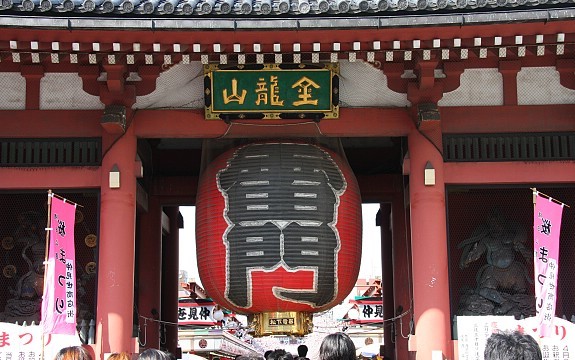
An outer gate, known as the Kaminarimon (Thunder Gate) encloses the temple and the tradional, and constantly busy shopping street known at the Nakamise Dori.

photo from: Tokyo Travel

Typical Japanese souvenirs such as fans, used and new kimono, lucky frogs and yukata can be purchased here, as well as traditional snacks such as osenbi rice crackers and dango.


The Hozomon (Treasure-House Gate) is the second of the temple gates, and beyond it lies the main temple hall and the five-storied pagoda.


The temple grounds are lovely to wander about in - with lots of interesting structures, statues, shopping and people-watching to take in.

Information

  • The temple grounds are always open. The temple hall opens 6am-5pm April to September and 6.30am-5pm October-March. The Nakamise Dori shops generally open 9am-7pm, however this can vary depending on the shop. 
  • There is no admission fee to access the temple grounds
  • Official website:  http://www.senso-ji.jp/

How To Get There
Senso-ji is easily accessible from Asakusa train station, which is linked to main train stations by the Ginza Metro line. 

Asakusa


View Larger Map

Asakusa (浅草) is a district in Taitō, most famous for the Sensō-ji, a Buddhist temple.


Asakusa is Tokyo's oldest geisha district and a former entertainment district. Asakusa's main attractions are a number of shrines and temples, including the Sensō-ji, a small carnival complex called Hanayashiki and traditional activities such as river cruises and rickshaw rides.

There are also a number of traditional shops and restaurants to browse. And I would really recommend that you do, Asakua is the sort of place that really rewards you for even the shortest of wanders. One minute you could be shopping for hand towels, lucky frogs and chopsticks in the tourist shops and the next you could stumble across a genuine geisha shop with extortionately priced, yet incredibly beautiful wigs, fans and haircombs. You could be fighting your way through the crowds to get to a ramune shop and then the next moment be dodging a rickshaw by jumping into a tranquil shrine garden.

Asakusa is the place to go if  you want a taste of traditional Japan, so grab some kompeito, and a bottle of ramune and enjoy the people watching opportunities for a day.

Related Posts Plugin for WordPress, Blogger...
There are currently Online Users
Twitter Delicious Facebook Digg Stumbleupon Favorites More