Louise and Rob: Day One

We wake up after barely sleeping at all, Rob is anxious and excited as this is his first flight, and Louise is really nervous and excited because, well just because we’re finally going to Japan!

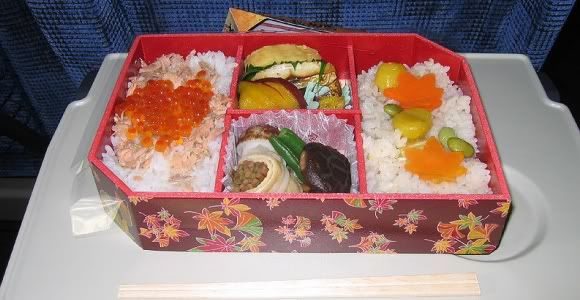
Bento

Bento is a single-portion meal that can be either homemade or takeout. Basically it's a pack-up, but Japanese style.

Louise and Rob: Day Two

We wake up jetlagged, but pleased we didn’t draw the blinds, the view is still amazing, and we can watch ant-sized Japanese people rushing to work while we feast on Milk Pocky, Koala’s March biscuits and odd textured buns masquerading as donuts, all washed down with cold coffee and grape Fanta.

Train Stations

No doubt you've heard all about Tokyo train stations. The horror stories of how busy they are, how confusing the maps are, how people get pushed onto rush hour trains. Forget all of your preconceptions - Tokyo has possibly the most efficient train station in the world

Louise and Rob: Day Three

We wake up super early again – a combination of jet lag and excitement, we’re going to Ueno Zoo today! This is one of the things we planned immediately when we decided to go to Tokyo, so we’re really looking forward to it, particularly because this will be the first time either of us have ever seen a panda.

Asakusa

Asakusa (浅草) is a district in Taitō, most famous for the Sensō-ji, a Buddhist temple. Asakusa is Tokyo's oldest geisha district and a former entertainment district. Asakusa's main attractions are a number of shrines and temples, including the Sensō-ji, a small carnival complex called Hanayashiki and traditional activities such as river cruises and rickshaw rides.

Showing posts with label culture. Show all posts

Monday, 28 May 2012

Louise: Day One

Today is the day! I'm returning to Tokyo! Although, this time I'm missing something vital - Rob. I've been volunteering in Thailand for just over two months, and I decided to round off my trip by returning to my home-away-from-home. I'm pretty nervous about heading there all by myself, but I'm certain I'll find my feet and there's nowhere I'd rather be going that Tokyo.

I fly via Taipei and almost die of thirst, because 1. it's blazing hot in Taipei and 2. nowhere in Taipei airport will accept British pounds, Thai baht or Japanese yen, and as I'm only going to be spending a few hours in Taiwan I didn't think it would be worth buying any currency. Oh, how wrong I was.

I'm also pretty annoyed, because my digital camera gave up working in Phuket, so I have absolutely no camera to take pictures with in Tokyo. GRR. Still, stay calm and carry on. Tokyo awaits!

I land in Tokyo in the evening, pass immigration quickly, withdraw some money and head out into the hot Tokyo air via the Keisei Line. I change to the Joban line in Ueno, to help me reach Minami-enju - the closest station to my hostel in Asakusa. When I arrive at the station it's really dark, and I'm wary of a heavy suitcase and a 15 minute walk to my hostel (which is Japan is considered REALLY far), so I hail a taxi. The white-gloved driver, fake flower decorations and magically open doors make me feel a bit like Batman, but sadly Batman with a cold. My head is full of gunk, so I don't manage to follow the route to the hostel (and will regret this later, when I get epically lost about five times).


I get to my hostel, (I stayed at Hostel Fukudaya - which I really, really do recommend. It's a bit ragged around the edges, but offers air conditioning, tatami floors and a really comfy futon for a really good price) and check into my room. I thrilled to be staying in a room with tatami mats and a big, fluffy futon. I feel like I'm dying of exhaustion, heat and head-goo. So I climb into my womb-like futon and fall asleep with the TV showing a terrible gameshow, the aircon quietly buzzing and the sweet smell of tatami floating in the air.

Louise and Rob: Day Ten

Today is our final day in Tokyo, so Louise begs Rob to add the Moomin Cafe into our itinerary once again, to which he agrees upon remembering how nice (and huge) the cakes are there. We also decide to head to Meiji Jingu in Harajuku.The day is boiling hot, so it seems like a good idea to wander around the leafy shrine gardens.

We sadly take the Yamanote line for what we know will be one of our last ever train rides in Tokyo and jump off a Harajuku. As soon as we begin to approach the park we notice buskers, cosplayers and people hawking art and music. We stop and buy a pair of paintings for about £7, before heading to the cool, shaded cafe standing to the entrance of the shrine. We refuel with chilled oolong tea and icecream and enjoy some people-watching before beginning the lovely shady walk to the shrine.


A lot of the wooded areas in Japan are so reminiscent of the scenery in Studio Ghibli's Princess Mononoke we half expect to see a kodama sitting amongst the bushes. We snap the obligatory pictures of sake bottles and the gigantic torii, and carry in tripping happily down the sun-dappled path to the shrine.


The shrine itself is beautiful, with lots of dark wood, gold and white - but it's baking hot in the courtyard, and the sun bleaches out most of the pictures - so we have a quick wander around before retreating to the cooler and less crowded gardens.


We pay around £6 to enter the shrine gardens, but are sadly told that we cannot visit Kiyomasa's Well, a powerful healing spot, as there is a problem with it that the ticket sellers limited English, and our even more limited Japanese can't quite translate. But the entry fee is still great value as the gardens are stunning.

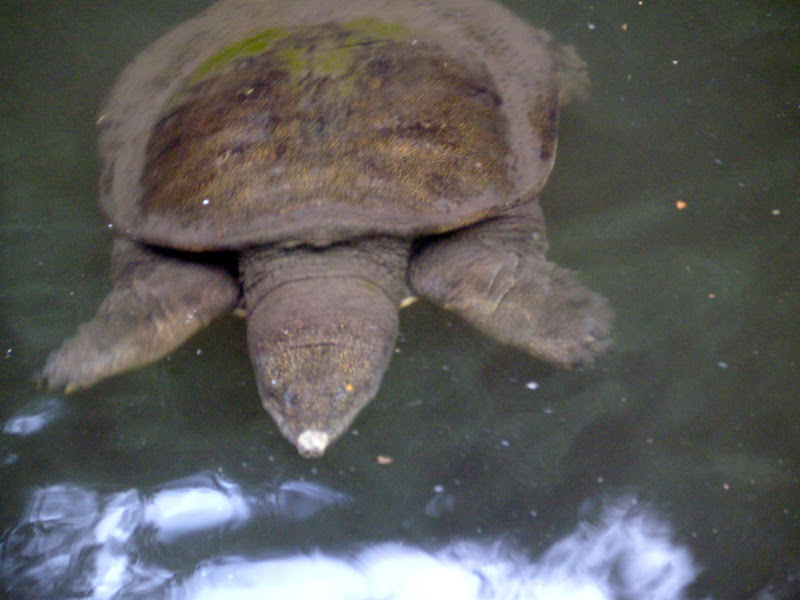
We spend a long time sitting on a wooden platform over a greeny-brown pond full of golden, red, white and black koi swimming lazily around, and great big, blocky turtles gently drifting. We spot a kingfisher in the distance and bask in the sun while enjoying the peacefulness of nature. We both feel an overwhelming sadness about leaving Tokyo, but it's hard to feel sad in such beautiful surroundings.


We wander through beautiful sun-streaked paths of broad-leafed trees, stout bushes and the gentle sounds of a stream trickling. The irises aren't flowering, but there are signs of life in them, and big, black crows hop along the floor, crackling in the twigs. We spend hours in the gardens, before emerging to a sunny, and busy gift shop, where we pick up some incense and some ice cream from a vending machine. Our adventure is almost over.
We end our day in Korakuen's  Moomin Cafe with sweet non-alcoholic cocktails, before picking up a few Moomin souvenirs and some pumpkin-filled bread from the adjoining bakery to serve as breakfast the following day.


And then we say our goodbyes as we prepare for the long flight home.

Friday, 12 August 2011

Louise & Rob: Day Five

We wake early to a fresh fruit breakfast while watching Sunday morning anime, which appears to be about football-playing robots...’cept it’s all in Japanese – obviously. How we love Japanese TV. We make our way to the train station – excited about leaving Tokyo for the first time. We catch the train and end up nose to armpit with what seems like the entire population of Tokyo, including a group of anime-styled teenagers who spend the journey on their mobile phones and pulling faces at each other. Kamakura seems an awful long way away when you’re stuffed into a train car on a hot day.

When we arrive we decide to head downhill which Rob thinks will lead us to the beach, on our way we pass a tiny sushi shop, and after deliberating what’s in the interesting looking fishy ones pick cucumber maki rolls. Food in hand we pass by roadside shrines – filled with fresh flowers, incense, books and food offerings.


We’re also really amused by the sight of a KFC complete with full-size Colonel Sanders statue. Awesome.

The beach is a huge sandy stretch, surrounded by grassy hills and mountains – and the occasional mysterious sign, which seems to feature a huge black bird with some sort of warning...great. We debate whether this means we’re going to be eaten, or taken on a jolly flight. But by this time we’re starving so sit down to eat our sushi on the beach, watching local families paddle in the surf and poke sticks at crabs.


As we’re eating we become aware we’re being scouted out by giant black birds – which Rob suggests could be kites. However for now they seem to not be killing us – which is good. We do finish our meal more hastily than before though while keeping an eye on the birds.

After checking our guidebook we decide to head towards the giant bronze Buddha. We get distracted by a vending machine – Louise gets a peach drink, which tastes just like eating a peach. Japan feels a little bit like Willy Wonka’s Chocolate Factory sometimes. We get completely lost and end up in a suburb-style area with some seriously big houses. We finally give in and decide to ask for directions and after being set on the right track we shelter from the blazing sun in a German-style cafe tucked off the main street.


Louise orders a mouse-shaped bun and is enthralled by the weird spiky flower on the table. After a cooling drink and sweet treat we head back onto the Buddha trail. We dip in and out of shops and realise how big an influence Hawaii has here. All of the shops are tuned into Hawaiian radios, and all seem to sell surfing gear, alongside wooden novelties and string dolls.

The day is so hot we grab a triangular icecream as we make our final ascent towards the Buddha. We pay a tiny amount to get in and are handed a wad of leaflets. And then we see the Buddha – it’s huge. There are huge pots of incense burning and plates piled high with oranges, and fresh flowers, and people. The whole area is vibrant and busy.


We both light a tightly packed bundle of incense, and decide not to go inside the Buddha’s claustrophobia-inducing belly despite the fact it’s ridiculously cheap. We look around the surrounding gardens and sit down in a shady secluded spot – it’s such a hot day.


After a quick recharge Louise is eager to be up and off again, but Rob has other plans...

Unbeknownst to Louise, Rob has been planning to propose this holiday, and this seems like the perfect time and place. By and large it goes well – especially when she says ‘yes’! The ring is only a makeshift one, purchased on the sly from a gift shop earlier in the day, and costing the princely sum of Y380. It’s a pink heart set in silver metal and Louise had wanted it when she saw it in the shop, but it didn’t fit the finger she was thinking of. Fortunately it fits her ring finger just fine!

We spend the rest of the day in a happy glow, ecstatically hopping from shop to shop, looking at gifts and planning our future. We’re so overjoyed we don’t even mind being crammed in the train on the way back.

On arriving in Shinjuku we return to the hotel for a bit of a rest before heading into Kabukicho for our evening meal and another night in the amusements. We find a tonkatsu restaurant which boasts sublime complimentary green tea, as well as delicious tonkatsu which we eat surrounded by businessmen and enjoy the boisterous, but smoky, atmosphere.

In the arcades we win Spirited Away playing cards and a Catbus flannel on the UFO catchers – thanks to Louise’s sheer skill. We also have a good go on the Taiko drumming game – a fantastic way of expending calories and by the time we’re done our arms are ready to drop off. Rob scores high while Louise bops along to the cheerful J-Pop beats.


We head back tired but happy, and so ends the best day of the best holiday of our lives so far.

Monday, 1 August 2011

Tonkatsu

Tonkatsu (とんかつ) is a tremendously popular dish throughout Japan, particularly in Tokyo, where it was first created and named in the Ginza district in 1890. However, despite a Japanese name (ton: pork; katsu: cutlet) and history, its origins are actually considered to be Western.


It consists of a cut of pork, coated in seasoned panko breadcrumbs, sliced and served - usually atop shredded cabbage and alongside white rice.

It is often accompanied with tonkatsu sauce, a condiment so ubiquitous in Japan that it's become known as simply 'sauce'. This has its roots in English Worcestershire sauce, although it's a good deal thicker in Japan.

Such a popular dish is it, that there are no shortage of restaurants which serve only variations on tonkatsu. More often than not, whenever you see pictures of a Tokyo street by night, you'll spot the kana in neon, telling you where delicious tonkatsu can be found - see if you can spot one in the picture below.

Picture: Channel 4

Kamakura Daibutsu & Kotoku-in Complex


View Larger Map


Daibutsu / 大仏 is the Japanese term for a large statue of Buddha - it quite literally means 'giant' (dai) 'Buddha' (butsu). There are many examples throughout Japan, ranging from the old (Asuka-dera in 609 AD) to the new (Ushiku Daibutsu was created in 1993).


All are large, imposing, beautiful and magnificent. One of the more famous examples is the Kamakura Daibutsu in Kamakura, Kanagawa Prefecture, which was created in around 1250 AD. It was made more famous in a Rudyard Kipling poem, and is a destination for countless visitors annually.


We were lucky enough to visit this particular spectacle ourselves, and in fact it was under Kamakura Daibutsu's watchful gaze that we got engaged, back in 2008. We can attest to its impressive, imposing presence, even if it didn't happen to be the most memorable part of the excursion for us that day...

The Buddha is situated in Kotoku-in complex with a few of the usual findings in a Japanese shrine, such as incense and trinket sellers, and fortunes. 

The walk up is also rather nice, with a number of stalls and shops selling traditional Japanese food, souvenirs and other bits and pieces.

Information
How To Get There
The Kotoku-in complex is within walking distance of Kamakura station, which can be accessed via the JR Shonan-Shinjuku Line from Shinjuku, or the JR Yokosuka Line from Tokyo Station.

Sunday, 16 January 2011

Louise & Rob: Day Three

We wake up super early again – a combination of jet lag and excitement, we’re going to Ueno Zoo today! This is one of the things we planned immediately when we decided to go to Tokyo, so we’re really looking forward to it, particularly because this will be the first time either of us have ever seen a panda. Louise starts the morning by squeezing herself into the short, but deep bathtub, and enjoy the feeling of being in a bath up to her ears, followed by flakey croissants from the konbini, washed down with matcha (a type of powdered green tea).

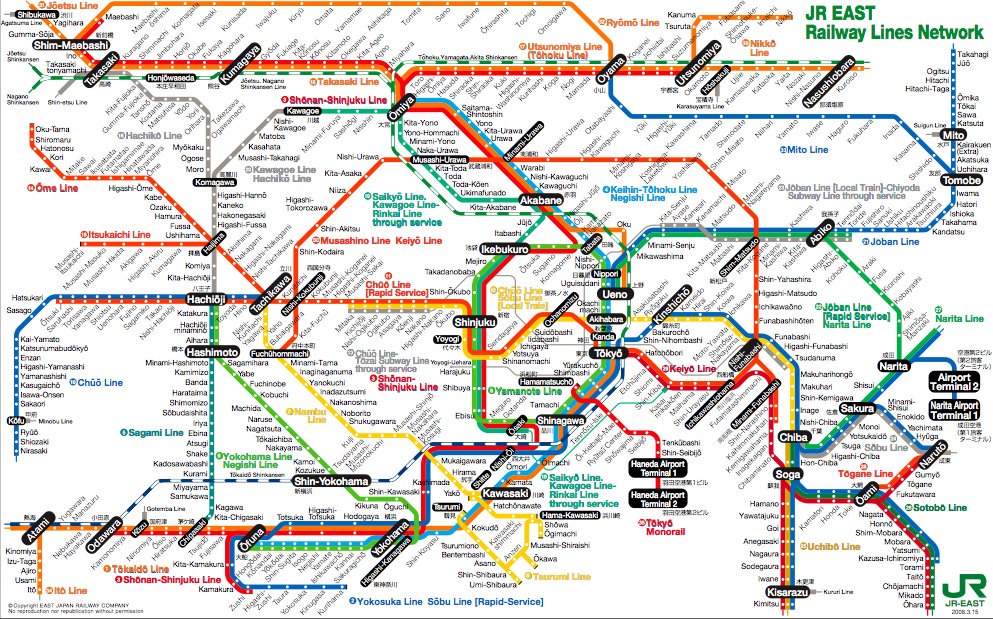
We try and find Shinjuku train station for the first time, and end up getting lost. Soon enough though, after following the huge train tracks (they must lead to a station eventually, right?) we happen across Shinjuku Station. How something this vast could have possibly escaped our attention is beyond us! Our first experience of Japanese rail travel is ultimately very positive, however the process was a confusing one to the uninitiated – ie. us! First, we must find our destination on a huge-giant complicated map.

 Photo from: Alien2Nrs

Then we find the corresponding fare, and insert this into an automated machine, which spits out two tickets. But what to do with them? We study the locals and see the turnstiles snatch the ticket from your hand, let you through, and zip the stamped ticket out the other end in under a second – everything here is as fast as it could be.

We then take our places on the platform (once we find it), which has clever markings on signifying where the doors will be once the train arrives. This means people get the chance to queue. And the Japanese are far better than us Brits at queuing – and that’s the one thing we’re known as being good at!

We arrive in Ueno and stroll through the park, enjoying the cooler weather and haughty looking cats weaving through our legs. The zoo is quite a walk away, so we have plenty of opportunity to view Japan at a slow, relaxed pace, which is great.


Upon arriving, we see a sign that tells us some very sad news – the zoo’s giant panda, Ling Ling, had died earlier that year. This is a shock to us, and while we’re sad we resolve not to let this ruin our day since we won’t have the chance to come back here for a long time.

Once we get a map of the zoo we see that there are still plenty of exciting animals to see. Louise is particularly excited about the Fennec fox and polar bears, and Rob can’t wait to see the gorillas and bears (his hairy cousins).


We’re really hungry so after gawping at a few monkeys and deer, and negotiating a few troops of schoolchildren, we head for the cafe. Armed with three different phrasebooks, Rob resolves to give the language a proper whirl this time. After establishing the fish and mushroom content of most of the menu items, we opt for chow mein noodle-stuffed omelettes, which are absolutely delicious, and we go back for shaved ice for dessert – partly because it looked really nice and is something Louise had always wanted to try, and partly because Rob wasn’t done experimenting with his Japanese!


After lunch, we take the monorail and head over to see some penguins, who were very diplomatically sharing their open enclosure with a visiting heron-style bird. It was probably amusing to see us more fascinated by this local creature than the actual exhibits.

We then wander off to look at a peculiar statue which, to our amazement, suddenly moves. That’s no statue, it’s a shoebill! We spend a while debating how often people must laugh at his face, and how sorry we feel for him, before deciding he’s handsome in an ugly kind of way. We are then distracted by okapis, which are among Louise’s favourite animals of all-time (half zebra, half giraffe – what’s not to love?). Next up is the vivarium, where we’re fooled for the second time of the day by an animal masquerading as an inanimate object. This time it’s the giant salamanders. Giant being the operative word – these things are huge, and appear to be made out of boulders. Here we also see arowana (our first view of these beautiful fish outside of Animal Crossing), alligators and Galapagos tortoise.

We see giraffes and rhinos on our way to the hippos – pygmy and regular. The crowds are enamoured with the normal hippos, and the poor pygmy is almost ignored even though he’s doing his best.

We start to get a little worried when we can’t find the Fennec foxes, despite following the map, before realising that they live in the small animal house which we’re standing right next to. Sadly this means no photography as they’re nocturnal, but that’s okay as we still get a really good look. Louise is amazed to find that Fennec foxes are even cuter in real life than she’d ever imagined. We’re also amazed by very bouncy kangaroo mice, a spindly-legged mouse deer and a very pink armadillo.


We take a stroll back to the East Garden to see the bears and big cats. We walk back by way of the giant anteater enclosure and we’re really amused to see the animal in a tree taking the biggest wee we have ever seen. Louise is giggling louder than the children watching.

We head for bear hill by way of the sealions and polar bears (which are bizarrely not part of bear hill). We spend a long time watching the polar bears (which Louise thinks look like puppies when they are wet) and trying to snap a good picture of them, as it’s rare to get polar bears in zoos back home. We’re pleased to see they aren’t exhibiting the same unhappy headbob as is common with captive bears.


We spend a while wandering around bear hill, before moving on to view the lions and tigers, and finally onto the gorillas, we find them particularly amusing as they adopt such human-like mannerisms. We end our day with a walk along the sun dappled woodland walk and buying Japanese sweets and panda-themed goodies from Little Trunk, the gift shop.

We catch the train back to Shinjuku, just as it begins to rain. We find the Japanese attitude to rain quite amusing, covering heads with newspapers, laptop bags, anything to hand really to keep them dry. Being British and from the North we’re fairly used to wet weather, so enjoy our walk back to the hotel, where we spend the evening with vending machine beers, crisps and more Pocky, and watch Japanese soap operas, with plenty of overwrought acting.

Friday, 14 January 2011

Arcades

Photo from: Hypno Pixel

Japanese arcades are very different to the dingy amusements that litter the great British seafront - there's no ugly flowery carpet or rusty 2p pushers - just bright white lights, pounding J-Pop and flashing, glowing, sparkling blinking lights. And sound, lots and lots of sound.

The arcades generally span several floors and entice people in with UFO catchers and walking robots. Once inside the colourful game centres, or geh-sen as they are commonly known in Japan, you can play the latest Tekken game, slap a sumo about, win the latest kawaii toy or have your picture taken in the puri-kura - kawaii photo booths which offer the chance to enlarge your eyes to anime-size proportions and jump into the latest pose. 


One of the firm favourites in geh-sen are the musical games where you can pick up a plastic guitar and strum along to the latest J-Rock song, or the fabulously strange Taiko Master - where you bang a plastic taiko drum and try to outdo your friend (occasionally by making vegetables pop on-screen - mooli away!).

Photo from: Kotter6

Occasionally you can find pachinko machines in geh-sen, however these are mostly restricted to dedicated pachinko halls.

Wabi-sabi

Wabi-sabi (侘寂) is a Japanese aesthetical concept, which can loosely and simplisticly be described as beauty withing imperfection.

It describes how an earthenware pot is attractive thanks to its blemishes, or how cherry blossom is so staggeringly beautiful because of, rather than in spite of, its fragility and short life span.

It is a very Zen concept, and closely linked to the Chinese Taoist philosophy. Both describe how important it is to consider something's strengths based on what it has, rather than assess its weaknesses based on what it does not have.

Again, this is a rather simplified way of summing it up, but more can be found here.

In Japan you will see many examples of the wabi-sabi aesthetic at work, in everything from architecture to tableware.

Photo by VANVANETC

Monday, 10 January 2011

Matcha

Matcha (抹茶) is a type of green tea powder used in tea ceremonies. It's properly high quality, with only the finest tips of specially grown tea (which is given a strict regime of rationed light and dark) picked by hand, and then the stems and veins of the leaves are removed. The remaining leaves are dried and then powdered.

Picture by Tea.co.uk
The powder is then stirred into hot (not boiling) water using a whisk, like the one pictured here. Of course, it's possible to use a mug and a teaspoon, but to fully appreciate the wabi-sabi aesthetic that's intrinsic to the tea ceremony, and the tea itself, it's better to use the right kit. Because with matcha you're consuming the actual leaf, rather than just water steeped in the leaf, it's also incredibly good for you.

Picture by Amato Neko
Matcha can be used in cooking, too, and as a flavour in ice cream, cakes, and wagashi (traditional confectionary) such as Yokan. It's perfect for this because not only is it delicious, but it also imparts a wonderful vivid green colour.

Sunday, 9 January 2011

Studio Ghibli Museum

Nestled in a park in Mitaka, Tokyo, is the Ghibli Museum (三鷹の森ジブリ美術館). The Mecca of anime fans everywhere, it's a wonderful celebration of the magic created by the studio through its many films. It was designed by Hayao Miyazaki (the director of many Ghibli films) himself, with the view of creating a museum that both young and old alike can get lost in.


Getting a ticket can be a little difficult if you are not based in Japan, however JTB (Japanese Travel Bureau) affiliates My Bus will sort you out tickets for just 1000JPY, about £8. It's worth remembering that the museum is very popular, so it's worth snapping up your tickets as soon as possible (My Bus release them 3 months in advance). However if you do want to chance it, and can understand written Japanese then tickets can be purchased at Lawson stores over in Japan. However I would recommend My Bus, as when tickets are bought from Lawson (although they are cheaper) they are timed tickets, so you only get 3 hours to look around, whereas when tickets are bought via My Bus you get the whole day to explore.

When you arrive in Mitaka you can either walk through the park to the museum, or grab the brilliantly decorated local bus service.


The museum itself is a hodgepodge of funny shaped little buildings, all crawling with ivy and other plant material, with lots of little surprises everywhere, from stained glass windows to small details such as taps and floor tiles.


 Upon arrival you get a nice surprise in the ticket booth, before (hopefully) realising that the real entrance is just a little further up the path. Once at the entrance a guide will check your passport details against your paper ticket, before allowing you to enter. Security is tight, but smiley.

 Photo from: Studio Ghibli Museum

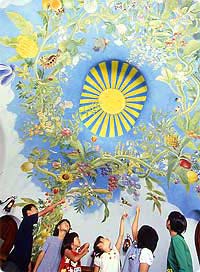
Once you are allowed inside, there is an amazing fresco painted on the walls and ceiling of the entrance hall. After you've gaped at this for a little while you can approach the ticket desk and have your paper ticket swapped for a lovely proper ticket, featuring animation cells from one of Ghibli's films.

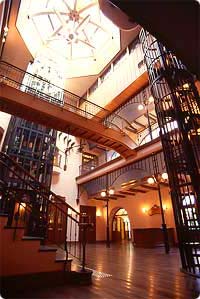
Then, you're in - properly! The main hall is full of shimmering lights and metalwork. It's clear from the beginning Miyazaki has put as much effort into the details here as he would his animations.

  Photo from: Studio Ghibli Museum

Moving on, there is a room featuring a series of animation-themed exhibits which change over time. However one mainstay seems to be a My Neighbour Totoro-themed zoetrope.
Photo from: Flixster

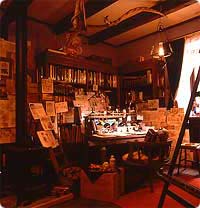
Up a floor is a mock up of an artist's studio which is stuffed to the gills with...well stuff. Random bits and pieces inspired by Miyazaki and Takahata's studios, as well as hundreds of colour sketches from the Ghibli films. 

  Photo from: Studio Ghibli Museum

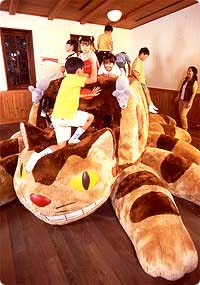
There's also a giant catbus room, where school-aged children can see what it is like to clamber aboard the furry animal (while making all the otaku adults jealous!)

  Photo from: Studio Ghibli Museum

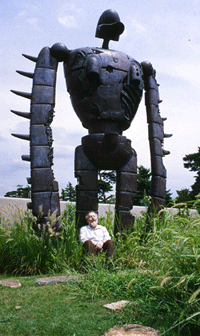
And one of the highlights of the museum is the Laputa-esque roof garden, complete with futuristic cube and giant robot soldier.

   Photo from: Studio Ghibli Museum

Be sure to take the time to check out the musical insect seats and ridiculously funny water fountain (press it - you'll see what we mean!) on your way up to the roof garden. 
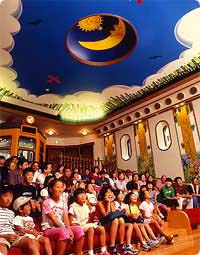
Perhaps the best part of going to the museum is the chance to visit the Saturn Theatre - where you can view an exclusive Studio Ghibli short. These films are never shown anywhere else, so seeing one is really quite a special experience.

 Photo from: Studio Ghibli Museum

Once you have explored the museum you should head out to the roof terrace and either grab a quick snack (hotdogs, icecream and drinks) from the small hole in the wall servery or join the queue to get into the Straw Hat Cafe - which serves delicious local produce in sandwichs, soups and pastas as well as giant cakes and non-alcoholic cocktails. 


Photo from: Kaz

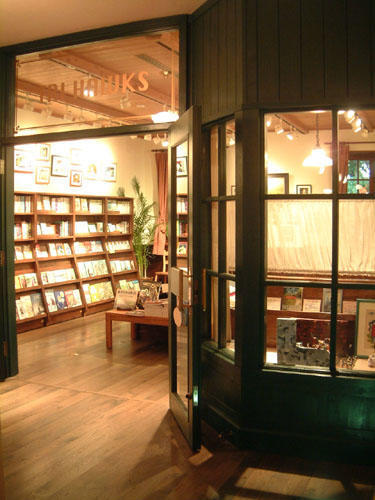
And then - possibly the best bit! - there are two shops to browse! Mamma Auito, which sells a variety of merchandise, including giant Totoro plushies, jigsaw puzzles and musical ornaments, and Trihawks, which sells beautiful Studio Ghibli art books alongside books recommened by Studio Ghibli members.

 Photo from: Studio Ghibli Museum

So take some time out, visit the Ghibli Museum in leafy Mitaka and remember what it is like to look through the eyes of a child.

Information

  • Open 10am-6pm 
  • Generally closed Tuesdays
  • Admission Fee: Adult: 1000JPY, 13-18 years old: 700JPY, 7-12 years old: 400JPY, 4-6 years old: 100 JPY
  • Local bus: 300JPY return
How To Get There


You can get to Mitaka from Shinjuku station by taking the JR Chuo line. The ride is approximately 20 minutes and costs under 500JPY.
You then take the Mitaka South Exit, from here you can walk through Inokashira Park or you can catch the community bus at the well-signposted bus stop just outside of the station (bus stop #9).

Anime


Anime (アニメ) is basically short for the English word "animation", which is appropriate because that's exactly what it is. As manga is to graphic novels, so anime is far more broad-ranging as a genre and in its reception than cartoons are in the UK.

So popular was it as a medium since the post-war period, and so skilled were the animators, that many of the kids' TV shows we grew up with were actually made in Japan - for instance The Moomins, The Mysterious Cities of Gold and ThunderCats, to name but a few, were all made there or with the help of Japanese experts in the field.

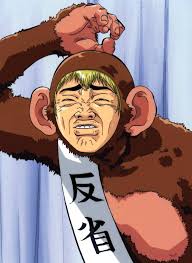
 GTO

Possibly some of the best examples of anime movies come from the always-excellent Studio Ghibli, such as Spirited Away, Howl's Moving Castle and Princess Mononoke. Notable TV series include Chobits, Great Teacher Onizuka,  Cowboy Bebop and Tokyo Mew Mew. This is by no means an exhaustive list, and the best way of finding your own favourites is to watch as much as possible - there's plenty to choose from!

Studio Ghibli

It would be foolish to not mention the Japanese anime powerhouse on this blog. Studio Ghibli are the animation studio who brought anime to global attention with the Academy Award-winning Spirited Away.


The studio was founded by Hayao Miyazaki, Isao Takahata and Toshio Suzuki in 1985 and shot to mainstream fame in Japan with films such as Nausicaa Of The Valley Of The Wind, Laputa: Castle In The Sky and Grave Of The Fireflies.

 
Studio Ghibli is so popular is Japan there are a large number of shops selling merchandise, and also a museum. Among the many and varied Ghibli merchandise on offer are stuffed toys, bento accessories, clothing, ornaments, music boxes, jigsaw puzzles, rubber-stamp sets, keyrings, plates, chopsticks, umbrellas, books, and almost everything else imaginable...

The films themselves are readily available around the world thanks to a distribution deal with Disney. They're even getting national releases in cinemas in the UK now. The DVDs always have the option of the original Japanese soundtrack with subtitles, or a dub by Disney.

Manga


Manga (漫画) refers to graphic novels and comic strips. Although often it's used outside of Japan to refer to Japanese animation, in the country itself "manga" is specific to print media.

In the UK, graphic novels tend to be both expensive, and quite niche. But in Japan manga is both ubiquitous and reasonably cheap. There are a number of categories of manga, which appeal to many different social groups - such as shojo (aimed at teenage girls), shonen (teen boys), seinen (men aged 18-40) and josei (late-teen to adult women). There are countless sub-categories within these, which relate to the themes, styles and the content.

Its appeal is so broad that it's not uncommon to see middle-aged salarymen or sucessful businesswomen reading the latest seinen or josei series on the commute to work. In fact former Prime Minister Taro Aso was himself a huge manga fan, reading between 10 and 20 magazines a week while in office.

Favourite series in the Ohayou Tokyo household include GTO, Chi's Sweet Home, Chobits, Death Note, and Tokyo Mew Mew.

Related Posts Plugin for WordPress, Blogger...
There are currently Online Users
Twitter Delicious Facebook Digg Stumbleupon Favorites More