



Today is our final day in Tokyo, so Louise begs Rob to add the Moomin Cafe into our itinerary once again, to which he agrees upon remembering how nice (and huge) the cakes are there. We also decide to head to Meiji Jingu in Harajuku.The day is boiling hot, so it seems like a good idea to wander around the leafy shrine gardens.
We sadly take the Yamanote line for what we know will be one of our last ever train rides in Tokyo and jump off a Harajuku. As soon as we begin to approach the park we notice buskers, cosplayers and people hawking art and music. We stop and buy a pair of paintings for about £7, before heading to the cool, shaded cafe standing to the entrance of the shrine. We refuel with chilled oolong tea and icecream and enjoy some people-watching before beginning the lovely shady walk to the shrine.

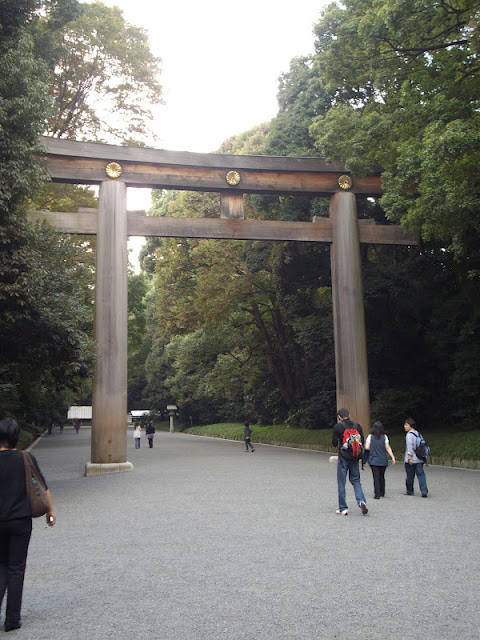
A lot of the wooded areas in Japan are so reminiscent of the scenery in Studio Ghibli's Princess Mononoke we half expect to see a kodama sitting amongst the bushes. We snap the obligatory pictures of sake bottles and the gigantic torii, and carry in tripping happily down the sun-dappled path to the shrine.

The shrine itself is beautiful, with lots of dark wood, gold and white - but it's baking hot in the courtyard, and the sun bleaches out most of the pictures - so we have a quick wander around before retreating to the cooler and less crowded gardens.

We pay around £6 to enter the shrine gardens, but are sadly told that we cannot visit Kiyomasa's Well, a powerful healing spot, as there is a problem with it that the ticket sellers limited English, and our even more limited Japanese can't quite translate. But the entry fee is still great value as the gardens are stunning.
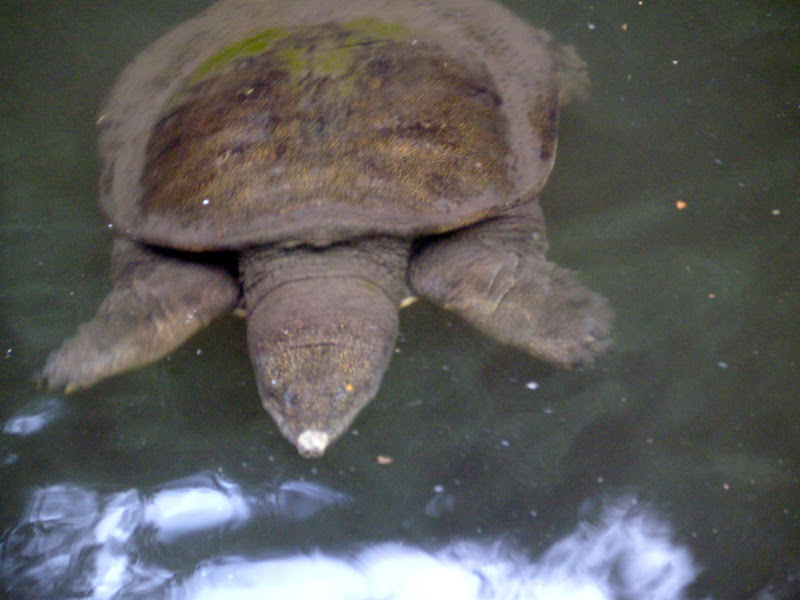
We spend a long time sitting on a wooden platform over a greeny-brown pond full of golden, red, white and black koi swimming lazily around, and great big, blocky turtles gently drifting. We spot a kingfisher in the distance and bask in the sun while enjoying the peacefulness of nature. We both feel an overwhelming sadness about leaving Tokyo, but it's hard to feel sad in such beautiful surroundings.


We wander through beautiful sun-streaked paths of broad-leafed trees, stout bushes and the gentle sounds of a stream trickling. The irises aren't flowering, but there are signs of life in them, and big, black crows hop along the floor, crackling in the twigs. We spend hours in the gardens, before emerging to a sunny, and busy gift shop, where we pick up some incense and some ice cream from a vending machine. Our adventure is almost over.
We end our day in Korakuen's Moomin Cafe with sweet non-alcoholic cocktails, before picking up a few Moomin souvenirs and some pumpkin-filled bread from the adjoining bakery to serve as breakfast the following day.

And then we say our goodbyes as we prepare for the long flight home.
We sadly take the Yamanote line for what we know will be one of our last ever train rides in Tokyo and jump off a Harajuku. As soon as we begin to approach the park we notice buskers, cosplayers and people hawking art and music. We stop and buy a pair of paintings for about £7, before heading to the cool, shaded cafe standing to the entrance of the shrine. We refuel with chilled oolong tea and icecream and enjoy some people-watching before beginning the lovely shady walk to the shrine.

A lot of the wooded areas in Japan are so reminiscent of the scenery in Studio Ghibli's Princess Mononoke we half expect to see a kodama sitting amongst the bushes. We snap the obligatory pictures of sake bottles and the gigantic torii, and carry in tripping happily down the sun-dappled path to the shrine.


The shrine itself is beautiful, with lots of dark wood, gold and white - but it's baking hot in the courtyard, and the sun bleaches out most of the pictures - so we have a quick wander around before retreating to the cooler and less crowded gardens.

We pay around £6 to enter the shrine gardens, but are sadly told that we cannot visit Kiyomasa's Well, a powerful healing spot, as there is a problem with it that the ticket sellers limited English, and our even more limited Japanese can't quite translate. But the entry fee is still great value as the gardens are stunning.
We spend a long time sitting on a wooden platform over a greeny-brown pond full of golden, red, white and black koi swimming lazily around, and great big, blocky turtles gently drifting. We spot a kingfisher in the distance and bask in the sun while enjoying the peacefulness of nature. We both feel an overwhelming sadness about leaving Tokyo, but it's hard to feel sad in such beautiful surroundings.

We wander through beautiful sun-streaked paths of broad-leafed trees, stout bushes and the gentle sounds of a stream trickling. The irises aren't flowering, but there are signs of life in them, and big, black crows hop along the floor, crackling in the twigs. We spend hours in the gardens, before emerging to a sunny, and busy gift shop, where we pick up some incense and some ice cream from a vending machine. Our adventure is almost over.
We end our day in Korakuen's Moomin Cafe with sweet non-alcoholic cocktails, before picking up a few Moomin souvenirs and some pumpkin-filled bread from the adjoining bakery to serve as breakfast the following day.

And then we say our goodbyes as we prepare for the long flight home.


