Louise and Rob: Day One

We wake up after barely sleeping at all, Rob is anxious and excited as this is his first flight, and Louise is really nervous and excited because, well just because we’re finally going to Japan!

Bento

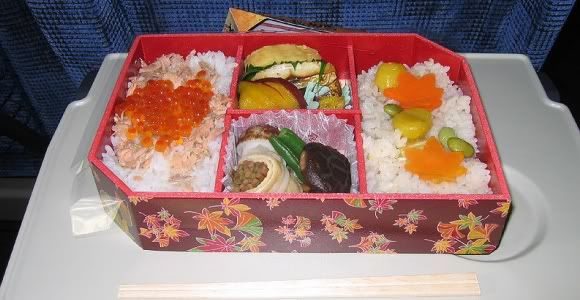
Bento is a single-portion meal that can be either homemade or takeout. Basically it's a pack-up, but Japanese style.

Louise and Rob: Day Two

We wake up jetlagged, but pleased we didn’t draw the blinds, the view is still amazing, and we can watch ant-sized Japanese people rushing to work while we feast on Milk Pocky, Koala’s March biscuits and odd textured buns masquerading as donuts, all washed down with cold coffee and grape Fanta.

Train Stations

No doubt you've heard all about Tokyo train stations. The horror stories of how busy they are, how confusing the maps are, how people get pushed onto rush hour trains. Forget all of your preconceptions - Tokyo has possibly the most efficient train station in the world

Louise and Rob: Day Three

We wake up super early again – a combination of jet lag and excitement, we’re going to Ueno Zoo today! This is one of the things we planned immediately when we decided to go to Tokyo, so we’re really looking forward to it, particularly because this will be the first time either of us have ever seen a panda.

Asakusa

Asakusa (浅草) is a district in Taitō, most famous for the Sensō-ji, a Buddhist temple. Asakusa is Tokyo's oldest geisha district and a former entertainment district. Asakusa's main attractions are a number of shrines and temples, including the Sensō-ji, a small carnival complex called Hanayashiki and traditional activities such as river cruises and rickshaw rides.

Showing posts with label harajuku. Show all posts

Monday, 28 May 2012

Louise and Rob: Day Ten

Today is our final day in Tokyo, so Louise begs Rob to add the Moomin Cafe into our itinerary once again, to which he agrees upon remembering how nice (and huge) the cakes are there. We also decide to head to Meiji Jingu in Harajuku.The day is boiling hot, so it seems like a good idea to wander around the leafy shrine gardens.

We sadly take the Yamanote line for what we know will be one of our last ever train rides in Tokyo and jump off a Harajuku. As soon as we begin to approach the park we notice buskers, cosplayers and people hawking art and music. We stop and buy a pair of paintings for about £7, before heading to the cool, shaded cafe standing to the entrance of the shrine. We refuel with chilled oolong tea and icecream and enjoy some people-watching before beginning the lovely shady walk to the shrine.


A lot of the wooded areas in Japan are so reminiscent of the scenery in Studio Ghibli's Princess Mononoke we half expect to see a kodama sitting amongst the bushes. We snap the obligatory pictures of sake bottles and the gigantic torii, and carry in tripping happily down the sun-dappled path to the shrine.

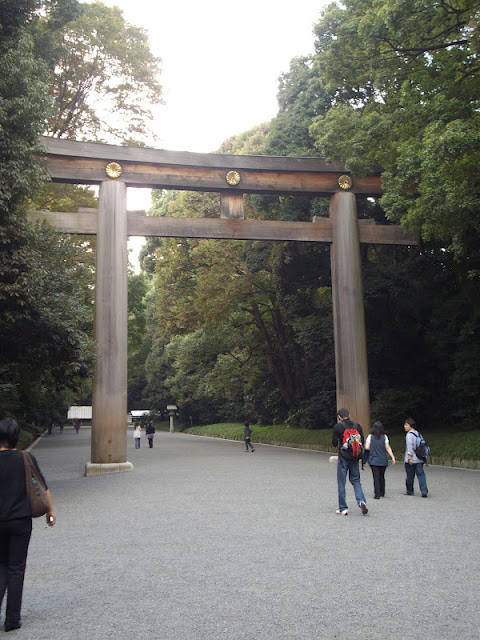

The shrine itself is beautiful, with lots of dark wood, gold and white - but it's baking hot in the courtyard, and the sun bleaches out most of the pictures - so we have a quick wander around before retreating to the cooler and less crowded gardens.


We pay around £6 to enter the shrine gardens, but are sadly told that we cannot visit Kiyomasa's Well, a powerful healing spot, as there is a problem with it that the ticket sellers limited English, and our even more limited Japanese can't quite translate. But the entry fee is still great value as the gardens are stunning.

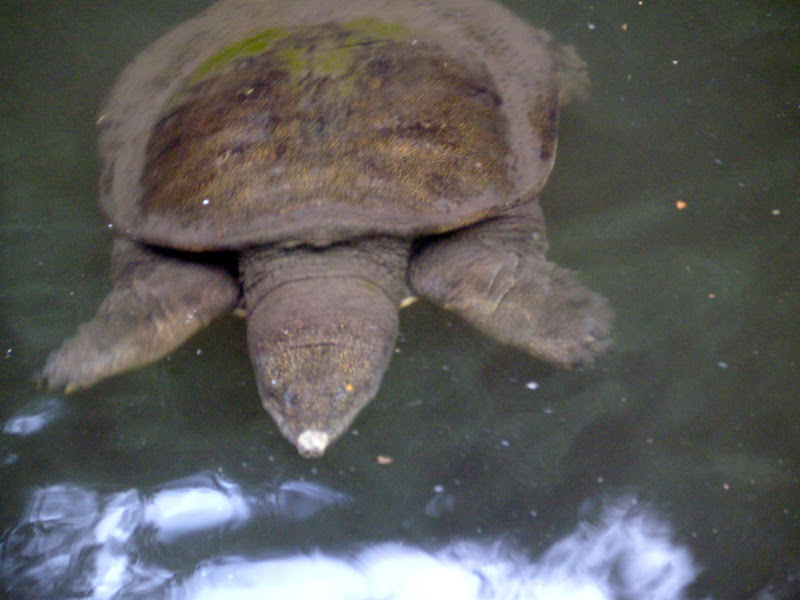
We spend a long time sitting on a wooden platform over a greeny-brown pond full of golden, red, white and black koi swimming lazily around, and great big, blocky turtles gently drifting. We spot a kingfisher in the distance and bask in the sun while enjoying the peacefulness of nature. We both feel an overwhelming sadness about leaving Tokyo, but it's hard to feel sad in such beautiful surroundings.


We wander through beautiful sun-streaked paths of broad-leafed trees, stout bushes and the gentle sounds of a stream trickling. The irises aren't flowering, but there are signs of life in them, and big, black crows hop along the floor, crackling in the twigs. We spend hours in the gardens, before emerging to a sunny, and busy gift shop, where we pick up some incense and some ice cream from a vending machine. Our adventure is almost over.

We end our day in Korakuen's  Moomin Cafe with sweet non-alcoholic cocktails, before picking up a few Moomin souvenirs and some pumpkin-filled bread from the adjoining bakery to serve as breakfast the following day.


And then we say our goodbyes as we prepare for the long flight home.

Friday, 5 August 2011

Louise & Rob: Day Four

We have a late start for the first time since arriving, eating chocolate chip bread while watching Japanese TV. We see the Mameshiba advert for the first time and quickly become bored of the irritating Curry Marche advert.


 We plan to see the temple at Asakusa today. We pour over the train and underground maps in our guide books, and decide the quickest way to get there is via Ueno. (Plus we went there yesterday – so it’ll be easy to find – right?)

We buy our tickets and walk through the gates like seasoned pros at the train station, but then become disorientated in the vastness of Shinjuku station. We eventually find our platform and we’re on our way.

Almost as soon as we arrive we’re thrown into the bustle of the shopping streets, we buy blackened roasted chestnuts from a street vendor, hot to the touch and wrapped in a small paper bag.

We become very excited about the market atmosphere of the shops, with baskets and tables piled high with goodies, and decide to buy some souvenirs for our friends and family. Louise is thrilled to find some very cheap vintage haori (small lightweight jackets – made from old kimono.) and buys a dusky pink one for herself and a pale pink one for her mum. We also browse inside and look at the exquisitely embroidered obi (kimono belt) and tiny tabi (cotton socks made to be worn with kimono). Along the way we buy colourful handkerchiefs, lacquered chopsticks, and various other trinkets and gifts.


We soon arrive at the Nakamise shopping street, and find shops peddling wooden kitchenware, garish kimono, wind-up toys, and geisha paraphernalia – such as wigs, fans and eye-wateringly expensive hair combs. There are also numerous food stalls selling sushi, udon and other snacks.


We buy sparkling water in an unusual bottle, which the vendor bangs on the table to release the marble stopper, which we later discover is a Japanese seasonal drink called ramune. We sit on the edge of a fountain and enjoy the chestnuts and water – licking the soot off our fingers.


We’re then tempted by a delicious potatoey smell, and discover a stall selling deep-fried potatoes, cut in a spiral and then rolled in seasoning. After indulging in a potato each, we move onto an archery side stall, where Rob does terribly and Louise does well – winning some theme park tickets (which we never actually get around to using). We approach Senso-Ji, walking through the various gates.

We come across a huge structure and discover that it’s a fortune-telling stand. We shake the tin and retrieve our sticks, this time getting our own fortune, by matching the stick’s symbol with ones on drawers. Louise’s is a very good one, and once again Rob’s is bad – warning him not to make any major decisions, such as moving house or getting married.


Before approaching the temple we cleanse our hands and mouths, as is the custom, and rub the healing smoke from the giant incense pot, Louise focusing on her sore feet. When we reach the temple we dodge flying yen and make wishes, before lighting remembrance candles.


On our way out and back to the station Rob buys a bracelet for Louise, it resembles the karma bead bracelets that were all the rage a few years ago, but has a tiny icon of the goddess Kannon inside one of the beads. Louise is also thrilled to spot a giant tanuki statue outside of a traditional-style restaurant.

We catch the train to Harajuku and meet a friendly business man who practices his English on us and shows us pictures of his pet dog. Harajuku is absolutely packed, but full of interesting looking shops and stalls, Louise finds a stall selling silk scarves and picks a vintage purple one with a hummingbird on, we browse the shops for awhile, and Louise falls in love with some giant plush cat paws, but upon deciding they wouldn’t fit in the suitcase purchases a Rilakuma t-shirt instead.


In the same shop we find a Chupa Chups lolly machine, where you pay 200 yen and get a ‘surprise’ amount of lollies. We discover vanilla ice-cream flavour, and know that we’ll never taste anything as good again.

We decide to search for Condomania – a shop that we have read about in our guidebook, and find it quite easily by the neon pink giant condom in the window. We browse the giant condoms, tiny condoms, glowing condoms, animal shaped condoms, you get the picture. We leave without making a purchase.

We decide to return to Harajuku a little earlier as dusk is falling and we’re getting hungry, so we head back to the hotel and drink cold Asahi beer from the vending machine, before heading to the hotel restaurant for food. Feeling refuelled we head out to play in the arcades in Kabukicho.


We have our first taste of Tekken 6, playing each other before two locals wipe the floor with us. We then find a generous grab machine that dispenses Disney lanterns, sweets, colourful soot sprites and string dolls. We win so much that the machine needs to be refilled, and we are given bags to carry out our goodies. We then head to a pachinko hall and try and master the upright pinball, and fail miserably – but have fun doing it. We play in various arcades, and find one that has a ufo catcher that’s full of curled up plush cats, we try and win one for a while, and a kind business man must have spotted us struggling as he alerted an arcade worker who came up and asked “Which one would you like? Shall I make it easier?” before moving the cat of our choice closer to the winning hatch. The business man watched us for a while, laughing at our efforts before handing over a cat he had won earlier. So eventually we emerge victorious with 3 curled cats.


We make our way back to the hotel, before snacking on sakura buns, bought in Shinjuku train station, and fall asleep looking forward to some actual fruit and vitamins tomorrow.

Wednesday, 3 August 2011

Meiji Jingu


View Larger Map

Meiji Jingu (明治神宮) is a Shinto Shrine in Harajuku dedicated to the deified spirits of Emperor Meiji and his wife, Empress Shōken. The shrine is set within a forest and includes a beautiful, traditional Japanese garden as well as the shrine itself.


The gardens of the shrine are very tranquil, and are a haven away from the bustle of Harajuku, it's a wonderful place for quiet reflection, and sun-dappled walks.

Information
  • The shrine has variable opening times throughout the year, but is generally open between the hours of 7am-4pm, it's best to check the official website for more thorough information. The garden is open 9am-4.30pm Mar-Oct, and 9am-4pm Nov-Feb.
  • Entry to the shrine is free, while a garden ticket costs 500JPY (around £4)
  • Official website:  http://www.meijijingu.or.jp/english/
How To Get There

The shrine is about a 1 minute walk from Harajuku station, which is on the main Yamanote loop


Saturday, 1 January 2011

Harajuku


View Larger Map
Harajuku (原宿) is the common name for the area of Shibuya around Harajuku station, and is possibly the most famous area of Tokyo, thanks to its reputation for cutting-edge fashion, and Gwen Stefani's eerie living dolls, the Harajuku Girls.


photo from: Explore Blogs

The area is well-known for the hundreds of teenagers that converge on Jinju bridge on a Sunday to cosplay or show off the latest in street fashion, such as lolita, goth loli and visual kei. Harajuku's most well-known area is probably Takeshita Street, a bustling walkway full of the lastest teen must-haves, including fashion and kawaii and cafes and restaurants. 

However, there's more to Harajuku than teen fashion - just near the train station is the beautiful Meiji Jinju, a shinto shrine and adjoining gardens, which is a lovely way to while away a few hours - or even lose yourself for a full day. There's also a range of more upmarket shops on Omotesandō for the more discerning shopper - and once you're done there, you'll need the tranquility that the aforementioned shrine and gardens afford. 

Related Posts Plugin for WordPress, Blogger...
There are currently Online Users
Twitter Delicious Facebook Digg Stumbleupon Favorites More