Louise and Rob: Day One

We wake up after barely sleeping at all, Rob is anxious and excited as this is his first flight, and Louise is really nervous and excited because, well just because we’re finally going to Japan!

Bento

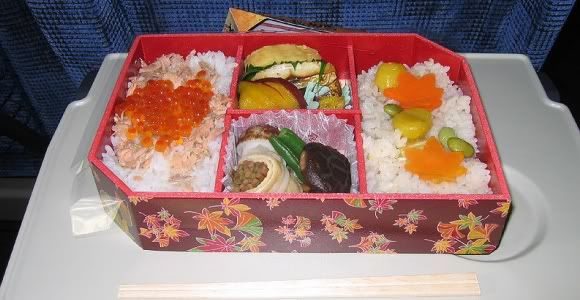
Bento is a single-portion meal that can be either homemade or takeout. Basically it's a pack-up, but Japanese style.

Louise and Rob: Day Two

We wake up jetlagged, but pleased we didn’t draw the blinds, the view is still amazing, and we can watch ant-sized Japanese people rushing to work while we feast on Milk Pocky, Koala’s March biscuits and odd textured buns masquerading as donuts, all washed down with cold coffee and grape Fanta.

Train Stations

No doubt you've heard all about Tokyo train stations. The horror stories of how busy they are, how confusing the maps are, how people get pushed onto rush hour trains. Forget all of your preconceptions - Tokyo has possibly the most efficient train station in the world

Louise and Rob: Day Three

We wake up super early again – a combination of jet lag and excitement, we’re going to Ueno Zoo today! This is one of the things we planned immediately when we decided to go to Tokyo, so we’re really looking forward to it, particularly because this will be the first time either of us have ever seen a panda.

Asakusa

Asakusa (浅草) is a district in Taitō, most famous for the Sensō-ji, a Buddhist temple. Asakusa is Tokyo's oldest geisha district and a former entertainment district. Asakusa's main attractions are a number of shrines and temples, including the Sensō-ji, a small carnival complex called Hanayashiki and traditional activities such as river cruises and rickshaw rides.

Showing posts with label food. Show all posts

Monday, 28 May 2012

Louise and Rob: Day Ten

Today is our final day in Tokyo, so Louise begs Rob to add the Moomin Cafe into our itinerary once again, to which he agrees upon remembering how nice (and huge) the cakes are there. We also decide to head to Meiji Jingu in Harajuku.The day is boiling hot, so it seems like a good idea to wander around the leafy shrine gardens.

We sadly take the Yamanote line for what we know will be one of our last ever train rides in Tokyo and jump off a Harajuku. As soon as we begin to approach the park we notice buskers, cosplayers and people hawking art and music. We stop and buy a pair of paintings for about £7, before heading to the cool, shaded cafe standing to the entrance of the shrine. We refuel with chilled oolong tea and icecream and enjoy some people-watching before beginning the lovely shady walk to the shrine.


A lot of the wooded areas in Japan are so reminiscent of the scenery in Studio Ghibli's Princess Mononoke we half expect to see a kodama sitting amongst the bushes. We snap the obligatory pictures of sake bottles and the gigantic torii, and carry in tripping happily down the sun-dappled path to the shrine.

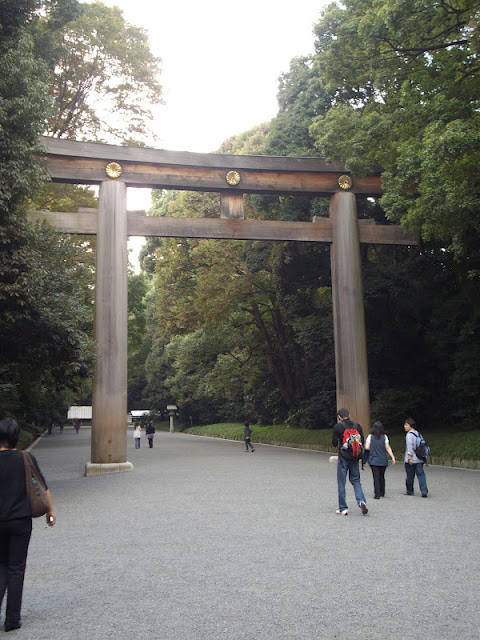

The shrine itself is beautiful, with lots of dark wood, gold and white - but it's baking hot in the courtyard, and the sun bleaches out most of the pictures - so we have a quick wander around before retreating to the cooler and less crowded gardens.


We pay around £6 to enter the shrine gardens, but are sadly told that we cannot visit Kiyomasa's Well, a powerful healing spot, as there is a problem with it that the ticket sellers limited English, and our even more limited Japanese can't quite translate. But the entry fee is still great value as the gardens are stunning.

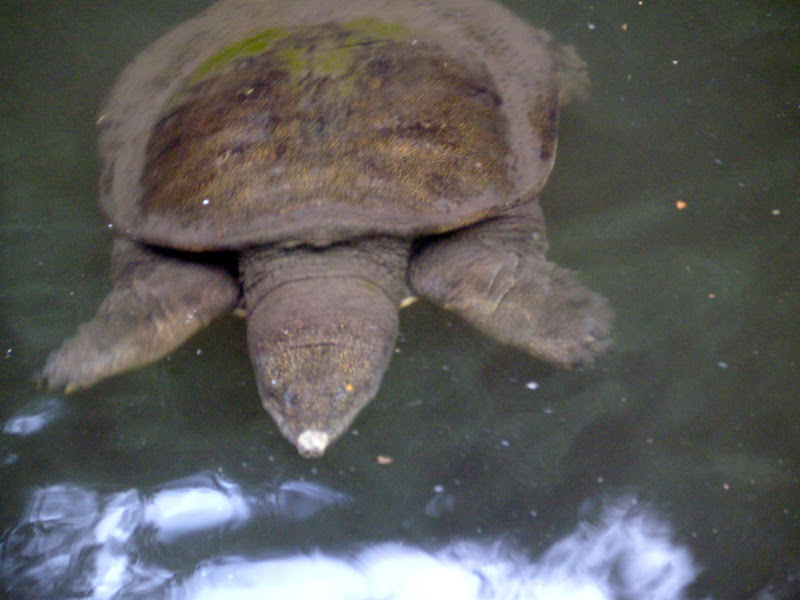
We spend a long time sitting on a wooden platform over a greeny-brown pond full of golden, red, white and black koi swimming lazily around, and great big, blocky turtles gently drifting. We spot a kingfisher in the distance and bask in the sun while enjoying the peacefulness of nature. We both feel an overwhelming sadness about leaving Tokyo, but it's hard to feel sad in such beautiful surroundings.


We wander through beautiful sun-streaked paths of broad-leafed trees, stout bushes and the gentle sounds of a stream trickling. The irises aren't flowering, but there are signs of life in them, and big, black crows hop along the floor, crackling in the twigs. We spend hours in the gardens, before emerging to a sunny, and busy gift shop, where we pick up some incense and some ice cream from a vending machine. Our adventure is almost over.

We end our day in Korakuen's  Moomin Cafe with sweet non-alcoholic cocktails, before picking up a few Moomin souvenirs and some pumpkin-filled bread from the adjoining bakery to serve as breakfast the following day.


And then we say our goodbyes as we prepare for the long flight home.

Saturday, 7 January 2012

Louise & Rob: Day Eight

We wake up late and eat  Pocky for breakfast with yet more bizarre Japanese gameshows. Louise decides to take a shower, instead of soaking for hours in the short but deep bathtub. The water pressure is so high that she almost gets pushed down the plug hole and comes out of the bathroom with red marks all over, before deciding to never brave it again – but soon feels consoled by milk Pocky.


We head out in the late morning, managing to avoid rush hour for what seems the first time during our holiday. At the train station Rob disappears to investigate a ‘new-looking’ drink vending machine while Louise panics on the platform that we are going to miss the train (despite the fact there’s another one in about 10 minutes). We get on the train safely and then suddenly realise we’ve forgotten where it is we’re actually going to, before realising we’re making a quick stop in Ginza before heading to the Moomin Cafe in Koraku-en.

We’re going to Ginza to look up Yakitori Alley, but it seems we’ve gotten here a little early and nowhere is open – but then we spot a small traditional looking restaurant nearby and duck in. We buy a set lunch (without much idea of what that entails..) and end up with deep-fried chicken, pickled radish, rice and miso soup all for around £3, including free rice refills – which is pretty standard in Japan.

We notice on a map that there’s a Godzilla statue in Ginza and want to check it out. We get really lost and wonder why it is that we can’t see a statue of the GIANT lizard, before noticing a Sega arcade. Louise wins 2 stuffed rabbits and 2 mini digital cameras in quick succession, while Rob is empty-handed.

We eventually find the statue – which is a LOT smaller than we expected, it’s in a quiet courtyard which quickly begins filling up with austere-looking businessmen. They all have a chuckle as we pose for tourist-style pictures with the statue.


We then make our way towards Tokyo Dome City, where we pick up a few Japan-exclusive goodies in Lush and ask for directions to the Moomin Cafe. We find it without a great deal of difficulty, and are delighted to see it resembles a cosy Nordic house.


Only with Moomins sitting around and about! We have Moomin-themed cakes and drinks while sitting with Moomin-Mama, which are delicious, before taking a look around the gift shop and spending probably more than we should on various goodies.

 
Outside, we see a fountain-and-lights show which is sponsored by Asahi (like many other things here!) and watch the scary-looking rollercoaster, which somehow manages to go right through the middle of a Ferris wheel. After a spell of sitting and relaxing, we feel an irresistible urge to go and play in more arcades. We play on a giant Pop-Up Pirate (and win an LED candle!), before Rob becomes glued to a sumo-drumming game and Louise pockets a Snoopy cup-and-spoon set but becomes sad at missing out on a Stitch in a panda suit... But what’s this? One more 100Y coin? Louise puts it in the machine, and one minute later she’s walking away proudly clutching her spoils. Victory from the jaws of defeat! 

Feeling as though our work here is done, we return to Shinjuku, to watch dusk fall from the hotel room, with a beer. Feeling ready for tea, we venture out for noodles at a traditional ramen bar. The bowls are huge (we have seen smaller baths) and filled with the most delicious broth, noodles and toppings. We noisily slurp our way through them, and Rob professes it’s the best food he’s ever tasted, and head to more arcades. One machine involves sliding a drink across a bar, cowboy saloon-style, and having it come to rest in a specific place. Rob (a closet cowboy) leaps at the chance to prove his Western mettle and ends up winning Louise a whole big goody-bag of various kawaii toys, including a giant Tarepanda, only to find her clutching a life-size Rilakuma wearing a crown, which she scored from a UFO-catcher. We worry if the arcades will have anything left in a few days’ time, or whether they’ll have to shut before we leave for home!

Friday, 12 August 2011

Louise & Rob: Day Five

We wake early to a fresh fruit breakfast while watching Sunday morning anime, which appears to be about football-playing robots...’cept it’s all in Japanese – obviously. How we love Japanese TV. We make our way to the train station – excited about leaving Tokyo for the first time. We catch the train and end up nose to armpit with what seems like the entire population of Tokyo, including a group of anime-styled teenagers who spend the journey on their mobile phones and pulling faces at each other. Kamakura seems an awful long way away when you’re stuffed into a train car on a hot day.

When we arrive we decide to head downhill which Rob thinks will lead us to the beach, on our way we pass a tiny sushi shop, and after deliberating what’s in the interesting looking fishy ones pick cucumber maki rolls. Food in hand we pass by roadside shrines – filled with fresh flowers, incense, books and food offerings.


We’re also really amused by the sight of a KFC complete with full-size Colonel Sanders statue. Awesome.

The beach is a huge sandy stretch, surrounded by grassy hills and mountains – and the occasional mysterious sign, which seems to feature a huge black bird with some sort of warning...great. We debate whether this means we’re going to be eaten, or taken on a jolly flight. But by this time we’re starving so sit down to eat our sushi on the beach, watching local families paddle in the surf and poke sticks at crabs.


As we’re eating we become aware we’re being scouted out by giant black birds – which Rob suggests could be kites. However for now they seem to not be killing us – which is good. We do finish our meal more hastily than before though while keeping an eye on the birds.

After checking our guidebook we decide to head towards the giant bronze Buddha. We get distracted by a vending machine – Louise gets a peach drink, which tastes just like eating a peach. Japan feels a little bit like Willy Wonka’s Chocolate Factory sometimes. We get completely lost and end up in a suburb-style area with some seriously big houses. We finally give in and decide to ask for directions and after being set on the right track we shelter from the blazing sun in a German-style cafe tucked off the main street.


Louise orders a mouse-shaped bun and is enthralled by the weird spiky flower on the table. After a cooling drink and sweet treat we head back onto the Buddha trail. We dip in and out of shops and realise how big an influence Hawaii has here. All of the shops are tuned into Hawaiian radios, and all seem to sell surfing gear, alongside wooden novelties and string dolls.

The day is so hot we grab a triangular icecream as we make our final ascent towards the Buddha. We pay a tiny amount to get in and are handed a wad of leaflets. And then we see the Buddha – it’s huge. There are huge pots of incense burning and plates piled high with oranges, and fresh flowers, and people. The whole area is vibrant and busy.


We both light a tightly packed bundle of incense, and decide not to go inside the Buddha’s claustrophobia-inducing belly despite the fact it’s ridiculously cheap. We look around the surrounding gardens and sit down in a shady secluded spot – it’s such a hot day.


After a quick recharge Louise is eager to be up and off again, but Rob has other plans...

Unbeknownst to Louise, Rob has been planning to propose this holiday, and this seems like the perfect time and place. By and large it goes well – especially when she says ‘yes’! The ring is only a makeshift one, purchased on the sly from a gift shop earlier in the day, and costing the princely sum of Y380. It’s a pink heart set in silver metal and Louise had wanted it when she saw it in the shop, but it didn’t fit the finger she was thinking of. Fortunately it fits her ring finger just fine!

We spend the rest of the day in a happy glow, ecstatically hopping from shop to shop, looking at gifts and planning our future. We’re so overjoyed we don’t even mind being crammed in the train on the way back.

On arriving in Shinjuku we return to the hotel for a bit of a rest before heading into Kabukicho for our evening meal and another night in the amusements. We find a tonkatsu restaurant which boasts sublime complimentary green tea, as well as delicious tonkatsu which we eat surrounded by businessmen and enjoy the boisterous, but smoky, atmosphere.

In the arcades we win Spirited Away playing cards and a Catbus flannel on the UFO catchers – thanks to Louise’s sheer skill. We also have a good go on the Taiko drumming game – a fantastic way of expending calories and by the time we’re done our arms are ready to drop off. Rob scores high while Louise bops along to the cheerful J-Pop beats.


We head back tired but happy, and so ends the best day of the best holiday of our lives so far.

Monday, 1 August 2011

Tonkatsu

Tonkatsu (とんかつ) is a tremendously popular dish throughout Japan, particularly in Tokyo, where it was first created and named in the Ginza district in 1890. However, despite a Japanese name (ton: pork; katsu: cutlet) and history, its origins are actually considered to be Western.


It consists of a cut of pork, coated in seasoned panko breadcrumbs, sliced and served - usually atop shredded cabbage and alongside white rice.

It is often accompanied with tonkatsu sauce, a condiment so ubiquitous in Japan that it's become known as simply 'sauce'. This has its roots in English Worcestershire sauce, although it's a good deal thicker in Japan.

Such a popular dish is it, that there are no shortage of restaurants which serve only variations on tonkatsu. More often than not, whenever you see pictures of a Tokyo street by night, you'll spot the kana in neon, telling you where delicious tonkatsu can be found - see if you can spot one in the picture below.

Picture: Channel 4

Friday, 14 January 2011

Wagashi

Photo by 松岡明芳

Wagashi (わがし) refers to any number of traditional Japanese confectionary. Emphasis is usually as much on the presentation of wagashi as it is the flavour; great care is given to both.
Examples of wagashi include mochi (sweetened ground rice paste) and derived recipes, Yōkan (jellied azuki bean paste), dango (a form of cooked mochi) and taiyaki (anko paste in a grilled batter, shaped like a fish).
Wagashi is usually served with tea, green tea being the ubiquitous form of tea in Japan, and in particular with matcha used in tea ceremonies.

Photo by Gothamist

Friday, 7 January 2011

Yakitori Alley

Yakitori alley is in the Ginza area of Tokyo, located underneath a big, dripping, blackened railway bridge. You know you found it when you become surrounded by glowing lanterns, rickety stools and catcalls of irishaimase! (welcome).

I must confess it feels rather strange to blog about yakitori alley, as although I did lots of research on it, searched for a while and did eventually find it - I was there much too early, so none of the restaurants were serving food.

 photo from: Nihon Sun

However, I can tell you this - it smelled amazing and looked amazing. Lots of different restaurants spill out into the street and become one - and the smell of cooking chicken and spices floats in the air.

 It's a place I'll definitely be searching for again - this time after 5pm (the time that most restaurants down Yakitori alley open).

Ramen


Ramen (ラーメン) is a delicious noodle-soup dish. There're many variations, but the biggest bifurcation in the ramen world could be said to be between the 'real' ramen, that you get in restaurants and noodle bars, and instant ramen. The former tends to be a cheap staple for many Japanese, particularly in Tokyo, but an eye-opening culinary treat for Westerners. While the price is kept very low in noodle bars (the efficient way of serving helps with this), the quality can be excpetionally high.


The latter, instant ramen, is basically a plastic/cardboard cup, dried noodles, freeze-dried vegetables and a sachet of soup base, to which boiling water is added. If you're in the UK, you might think this sounds remarkably like a Pot Noodle, and you'd be right. But to be fair to ramen, Golden Wonder's offering is perhaps not the best example of the genre, and a trip to your local Asian supermarket can prove very enlightening as instant ramen can come in all shapes and sizes - and, of course, flavours.

Photo by Chipango


One of the best things about real ramen, as opposed to instant, is the various toppings that can be incorporated. Ham, seaweed, egg, spring onions (scallions), chillies, tofu, gyoza, meatballs, sesame seeds - the combinations are limitless. The broth is either clear (usually dashi fish stock or soy sauce-base) or cloudy (often pork bone-base), and the noodles can be straight or crinkled.

Remember, it's fine to noisily slurp your noodles - in fact, it's polite. If you're told "shizuka desune" ("you eat quietly"), give it a big shluurp! And once the noodles are gone, feel free to drink from the bowl - the broth is delicious, and if you use a spoon you'll be there all day.

Itadakimasu!

Koala's March

Koala's March (コアラのマーチ) is a type of Japanese confectionary.

Photo from: Jappleng

They are a biscuit filled with sweet flavoured cream. A number of different flavours exist with the most commonly available outside of Japan being chocolate, double chocolate, strawberry and milk but in Japan more unusual flavours such as honey, banana and pancake are available.

The biscuits are really kawaii, with lots of differently-posed little koalas - it seems almost too sad to eat them...almost!

Thursday, 6 January 2011

Pocky


If you're not familiar with Pocky already, I recommend you take a trip to your local Asian store (unless you're in Asia, in which case just your regular store!) and try some out. They're essentially straightened-out pretzels, dipped in chocolate with one end kept coating-free to prevent sticky fingers. Efficient! Made by Glico, they're also sold as Mikado in other countries such as the UK.

There are a great many flavours, with more being added seemingly with every season. There are also a good number of similar treats from other brands such as Meiji Lucky Stick, Pretz and Toppo, but Pocky really rule the roost in this area. It's become almost a generic term, such as Hoover or Corn Flakes.

The obvious flavours such as chocolate, milk, coffee etc are complimented by the slightly more left-field additions of, for example, pumpkin, cream cheese, pizza, soy bean, and many, many more.

Glico have also bolstered their Pocky stable with such wonderful inventions as Dessert Pocky (thicker Pocky in which the stick is hollowed and filled as well as coated) and Giant Pocky (go on, guess what makes Giant Pocky different...).

Izakaya


Izakaya (居酒屋) are traditional Japanese pubs, which also serve food. They're recognisable by the red lanterns hanging outside, such as the ones above, which denote good value eating establishments.

When you arrive you'll usuallly be given a hot towel (oshibori) and a small appetiser (otoshi). It might seem strange to be given food you didn't order - and for which you'll be asked to pay later - but it's customary, and when you consider that there's no tipping, it's really quite reasonable.

Food on offer often includes the likes of chicken skewers (yakitori), fried chicken (karaage), raw fish (sashimi), edemame beans, and tofu.

As with anywhere in Japan, before tucking in, it's polite to say "Itadakimasu!"

Wednesday, 5 January 2011

Moomin Cafe & Bakery

Sitting on the lower level of Korakuen's Dome City alongside theme park rides, sitting area and dancing fountains is a little haven of Scandinavian food and kawaii - The Moomin Cafe & Bakery.


View Larger Map

You can sit in the cafe with Moominmamma, Snorkmaiden or a number of other Moomin characters and eat whimsical food that Moominvalley would be proud of, including Moomin-shaped omelettes, giant cakes and some very special non-alcoholic cocktails.


The cafe itself is full of amazing details for any Moominfan or indeed any kawaii-lover. Tiny hattifattener spoons, character-shaped pasta and some beautiful artwork on the walls. It's a lovely place to spend an hour or two - however the prices in the cafe can be slightly expensive.


The cafe is adjoined by a small bakery - with a range of cakes, buns, breads and more, and a shop selling character goods, DVDs, books, stickers and many more things.

Information
  • Open 10am-11pm
  • Mon-Sun
How To Get There
  • The cafe is inside Korakuen's Dome City, and is easily accessed from Korakuen Station on the Marunouchi line.
  • The Marunouchi line can be accessed from hinjuku, Ikebukuro and Tokyo station which are part of the Yamanote loop.


Tuesday, 4 January 2011

Bento

Bento is a single-portion meal that can be either homemade or takeout. Basically it's a pack-up, but Japanese style.

 Photo from: Bento Zen

A traditional bento meal generally features one portion of rice, one portion of meat or fish, and one or more portions of pickled or cooked vegetables.

Bento can be purchased at a number of different places throughout Tokyo, including konbinis and train stations. In fact, bento in train stations is so popular it has its own name - ekiben.


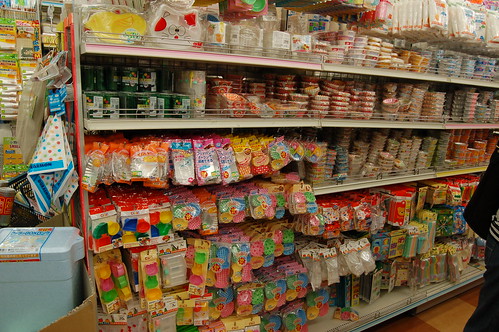
Home bento accessories can be bought in a number of shops in Japan, including boxes, food picks, sauce containers and furikake shakers.

Photo from: Bento Business

Bento is so popular in Japan that if you are anywhere public around lunchtime you will notice the appearance of brightly coloured character boxes, muted traditional boxes and of course macho boxes from many a bag. So don't be surprised if the prim-looking office worker next to you pulls out a bright Totoro box, filled with kawaii-faced bears and fruit-shaped food picks.

Monday, 3 January 2011

Vending Machines

What website about Japan would be complete without mentioning the ubiquitous vending machines?


They are quite literally everywhere in Tokyo - if there's not one in front of you there's probably one just around the corner. In fact Japan on the whole has one vending machine for every twenty three people.

A number of things can be purchased from vending machines including icecream, cigarettes, bananas, alcohol, eggs and even sex toys! However the most popular by far are snacks and drinks.

Cleverly Tokyo's drink vending machines can serve both hot and cold drinks depending on the season and buyers preference.

Furikake

Furikake (振り掛け) is a Japanese condiment that is sprinkled over rice and inside onigiri (rice balls).

 Photo from: Kyoto Foodie

It can be a number of different flavours and colours, with the most popular types being wasabi (a spicy horseradish-type sauce), fish and seaweed.

Furikake can be bought in a number of places very cheaply, including 100 yen stores, and is usually with the bento goods as furikake is often used in bento to create colourful food, or shapes and faces.

 photo from: TokyoKawaii


Related Posts Plugin for WordPress, Blogger...
There are currently Online Users
Twitter Delicious Facebook Digg Stumbleupon Favorites More